|
After months of operating in absentia, the president has now reemerged, talking up the need for “the biggest deal possible” – a grand bargain that would include entitlement reform, spending cuts and – of course – tax hikes. Obama’s proposal is a poison pill that sensible conservatives on Capitol Hill should dismiss out of hand.
|
|
| To say that Barack Obama has a well-defined leadership style would be perhaps too complimentary. What Obama has instead is a style of crisis management masquerading as leadership. Time and time again, the president waits for issues of public import to reach a moment of absolute peril before publicly weighing in. It was his way in the debate over ObamaCare, over extending the tax cuts enacted by President George W. Bush and now over raising the national debt ceiling.
On Monday, Obama took to the podium in the White House Briefing Room to deliver a risible diagnosis of America’s debt crisis. Among his insights: “What we have said is as part of a broader package we should have revenues, and the best place to get those revenues are from folks like me who have been extraordinarily fortunate, and that millionaires and billionaires can afford to pay a little bit more.”
What the president fails to grasp is that the roster of “folks like me” is extremely thin. The vast majority of individuals in the upper strata of the income tax code didn’t get there through self-referential bestsellers. Rather, they got there through building businesses from the ground up – and creating employment opportunities for Americans less fortunate then themselves.
Obama is holding those Americans hostage in the debt ceiling talks. After months of operating in absentia, the president has now reemerged, talking up the need for “the biggest deal possible” – a grand bargain that would include entitlement reform, spending cuts and – of course – tax hikes.
Obama’s proposal is a poison pill that sensible conservatives on Capitol Hill should dismiss out of hand. The president has had more than two years to execute policies that he contends can generate economic growth, relying primarily on government spending. With those initiatives only compounding the nation’s debt crisis in the end (the final tab for the stimulus bill alone is estimated at nearly a trillion dollars), it’s the height of blame-shifting to ask taxpayers to further suffer for the president’s fundamental misunderstanding of basic economics.
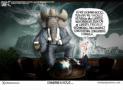
Unfortunately, the response from Republicans in Congress has not been uniform. Speaker of the House John Boehner is resolutely (and rightly) drawing a line in the sand, refusing to accept tax increases as a part of the deal. Senate Minority Leader Mitch McConnell, however, has showed no such steel, proposing a plan that would essentially allow Obama to unilaterally increase the nation’s debt ceiling with no actionable requirements to cut spending.
McConnell’s plan represents exactly the kind of politics that organizations like the Tea Party arose in response to: Blame the other side while the nation remains on the road to perdition. Rather than sign on to this fool’s bargain, the GOP should maintain the courage of its convictions while still producing a plan with a chance at political success.
This means that they should directly challenge Obama’s contention that he will not sign a short-term fix to the debt crisis. By insisting on a long-term solution – and then insisting that solution include tax hikes – the president thinks he can paint Republicans into a corner. Instead, they should authorize a short-term increase in the debt ceiling with large spending cuts and no tax increases. That would leave Obama with this dilemma: Sign a bill that doesn’t meet his standards or veto it and stand to bear full responsibility when the nation hits its debt limit. The latter scenario would test those crisis management skills the president is so fond of – after all, that would be a disaster of his own making.
|