




|
|
|


| Yes, $2 Gasoline is Possible |
 |
|
By Quin Hillyer
Wednesday, September 14 2011 |
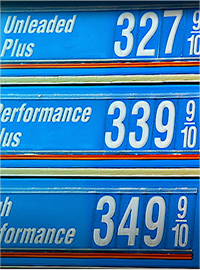
On gasoline prices, maybe Michelle Bachmann was right. The House member and presidential candidate made waves about a month ago, and received significant criticism, when she promised that a Bachmann presidency could bring gasoline prices down below $2 per gallon. Her detractors said it was a wildly reckless promise because it supposedly is an unachievable pledge. History, though, suggests that Bachmann isn’t too far off. Also, new research by Louisiana’s Pelican Institute think tank provides further, uh, fuel in favor of Bachmann’s argument. The history is that gasoline prices tend to jump around far more wildly than that of almost any other commonly used commodity. There are plenty of times when gas prices dropped nearly as precipitously as they would need to do again to fall below two dollars. In the long run, though, there is no reason to believe that gasoline prices – if public policy remains the same – shouldn’t roughly track inflation. Bachmann argues, not terribly unreasonably, that if the per-gallon price was $1.79 (actually, official numbers say $1.81) on the day Barack Obama took office, then there’s no reason the prices can’t dip below $2 again, considering how low inflation has been otherwise. Critics say, however, that the $1.81 was an artificial low resulting from the financial crisis of late 2008. Okay, fine: Let’s find a representative price comparison in economic times that did not favor low prices. In the fall-winter of 2002-2003, gas prices steadily rose in anticipation of supply disruptions caused by the looming war to liberate Iraq. On March 17, 2003, just three days before the “shock and awe” campaign began, pump prices reached what was then an all-time high of $1.673 per gallon. Again, that was then the highest average national price ever (not taking inflation into account), a price artificially high because of those unusual world events. Now, pull out a handy online inflation calculator, and you’ll see that $1.67 then is the equivalent, after inflation, of $2.06 today. In other words, what was an all-time high less than a decade ago is now within seven cents, inflation adjusted, of reaching down to the levels Bachmann promises. Yet prices today average $3.629, even though energy production worldwide is significantly higher now than it was back then. It is not unreasonable to believe these huge price hikes are reactions to changes in public policy – changes exactly of the sort the Obama administration has implemented, much to this nation’s economic distress. Now Kevin Mooney of the Pelican Institute reports, at The American Spectator, both that an investment bank’s new report says the Obama deepwater-rig permitting slowdown could soon cause 20 more rigs to leave the Gulf and that Louisiana’s Republican U.S. Sen. David Vitter has written Interior Secretary Ken Salazar blasting the administration’s slowdown policies. According to Vitter, nine fewer deepwater rigs are now operating than had been the case (on average) before the Obama policies took effect. Overall, Vitter suggests, those policies will cause a “decline in drilling activity of approximately 60 percent.” Combined with the Pelican Institute’s previous report that 10 rigs already have left, this means there is good reason for oil futures markets to anticipate tight oil supplies for quite a while to come, and for energy companies to price their products accordingly. The administration has similarly blocked or almost hopelessly slowed development of oil shale out West and in Pennsylvania, as well as drilling off both Alaska and the Atlantic coast, not to mention regular inland drilling numerous places. The administration has also been unfriendly to oil sands, pipelines, and – relatedly – natural gas. Only somebody who utterly fails to understand economics could fail to believe these supply-restrictive polices are keeping prices artificially high. (They will climb higher still if Obama gets his way in hiking taxes on the petroleum industry.) Some will argue that even if all of this domestic energy development were going full bore, the percentage of supply change wouldn’t be enough higher to force prices considerably lower. This argument fails. If domestic production by the world’s largest energy consumer were higher, the foreign suppliers would be forced both economically and psychologically to compete via lower prices. Again, much of pricing is an expectations game, and if the U.S. suppliers were going all out, the expectations for lower prices would be somewhat of a self-fulfilling prophecy. The oil “permitorium” is affecting not just prices, but jobs – by one report in March, at least 13,000 jobs lost in the Gulf region alone. On the other hand, an industry-funded study released Sept. 7 said that taking off the Obama handcuffs could result in creation of a million new jobs in the next seven years. All of which is good reason to believe that Bachmann, or any president with wiser policies, really could help force down the costs of our weekly fill-ups. |
Related Articles : |
