




|
|
|


| Where’s the Border Fence? |
 |
|
By Ashton Ellis
Wednesday, January 19 2011 |
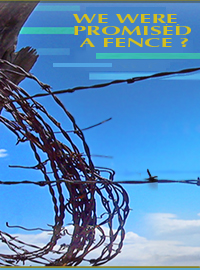
On the Friday before Martin Luther King Jr. weekend, the Department of Homeland Security (DHS) announced plans to scrap the so-called “virtual fence” project along the 2,000 mile United States-Mexico border. The official reasons cited included cost overruns and technology failures. The truth, of course, is a different story. At the height of the last amnesty craze in 2006, Congress passed the Secure Fence Act (SFA). The measure required building 700 miles of double-layered fence to physically separate the United States from Mexico. The bill’s authors also intended to demonstrate that the federal government accepted the American people’s judgment that illegal immigrants could not be granted citizenship until the southwestern border was secured. With the border fence supposedly under construction, the Senate gathered on June 28, 2007, to end debate on comprehensive immigration reform and vote its passage. Then, Senator Elizabeth Dole (R-NC) addressed the chamber. In the final minutes before the Democratic majority moved for cloture, Dole reminded her colleagues that only two miles had been built. For Dole, enough was enough. “And so my strong view is that it’s not just promises, it’s proof that people want. The American people want to see results, control of our borders. So we need to establish standards, metrics and show that they have been achieved,” said Dole at the time. With devastating accuracy, she confirmed what many suspected: Governing elites used the promise of a border fence to ease resistance towards amnesty for illegal immigrants. After Dole exposed the hypocrisy, comprehensive immigration reform died on the Senate floor. The open borders crowd was defeated, but not deterred. In December 2007, the Bush Administration tapped Senator Kay Bailey Hutchinson (R-TX) to attach an amendment to a DHS appropriations bill. The amendment’s language added a wrinkle to SFA by granting then-Homeland Security Secretary Michael Chertoff complete discretion over the border fence. Since the Bush Administration favored granting citizenship status to illegal immigrants, but was dragging its feet on building the fence, many saw Hutchinson’s amendment as gutting SFA’s mandate to secure the border first. Hutchison hit back at criticisms she gutted the border fence by pointing to a new requirement in her amendment. By the end of 2008 (i.e. within twelve months of the amendment’s passage) 370 of the 700 miles of the southwest border would be fenced. As of September 2008, fewer than 120 miles were completed. So much for mandates. Then along came the Secure Border Initiative network (SBInet), a compromise between pro-amnesty governing elites and the defense industry to further weaken the fence project. Throughout the public debate over the border, the Bush Administration was quietly replacing its promise of a physical fence with a high-tech virtual one. When the $1 billion contract was awarded to Boeing in September 2006, the project was hailed as a way to harness technology for fulfilling public policy. A little more than five years later, neither goal was reached. To date, only 53 miles of border have been “virtually” fenced. Problems ranging from weather disruptions to camera lenses that can’t distinguish between humans and shrubs pushed SBInet into boondoggle territory. Numerous investigations in and outside the government confirmed the project was a manmade disaster. Last week’s announcement to end the program officially concluded this taxpayer-financed fool’s errand. The irony of all this is that many Americans support granting some path to legalization for illegal immigrants – if a border fence is built first. The logic is simple: secure the border to stop the flow of illegal immigration, and then deal with those who are already here. Had Congress and Presidents Bush and Obama taken the American people’s demand for a border fence seriously and followed any of the fence laws they enacted, today they might find a public ready to talk about more comprehensive reform. As it is, Americans were swindled out of more than $1 billion in exchange for two more federal immigration laws that are not enforced. Is it any wonder that voter mistrust of the federal government is at an all-time high? |
Related Articles : |
