|
Limited American forces should stay in country to perform counterterrorism operations, ensuring that a full-scale invasion will never again be necessary. But that's where the engagement should stop.
|
|
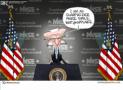
| Viewers who were unfortunate enough to tune into President Obama's Wednesday night speech at the wrong moment could have been forgiven some measure of confusion. The speech, billed as the president's pronouncement on the future of America's war policy in Afghanistan, spent only about a third of its length actually discussing that conflict.
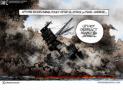
The first section of the remarks consisted primarily of the inevitable and unnecessary history lesson without which Obama seems incapable of delivering a speech. Never mind that there wasn't a single viewer who needed to be reminded that the war in Afghanistan grew out of the 9/11 attacks and that the Taliban sheltered Al Qaeda. Obama's languid opening was intent on recapping the entire affair with all the superficiality of a high school history textbook. If the president's need to be professorial is pathological, couldn't he at least be good at it? This being an Obama speech, there was also, of course, a gratuitous shot at the war in Iraq - you know, that conflict from which he borrowed the concept of a "surge"?
Even more bizarre was the speech's closing section, which read like a test run of the president's coming reelection campaign. After passing references to the war in Libya and the so-called "Arab Spring" (both of which were said to be reflections of American ideals - someone please tell the people in the region), the president headed even further afield, with talks of renewed "investment" (read: spending) here at home and even the obligatory genuflection to clean energy. And he put a bow on the package with his execrable closing admonition, "America, it is time to focus on nation building here at home." It seems imprudent at best to refer to a nation that you've governed for two and a half years as in need of the same remediation that is applied to failed states.
When Obama did directly engage with the situation in Afghanistan, his rationales were at times too breezy. Like many who advocate drawing down from the country, he cited the death of Osama Bin Laden as justification for beginning to pull back. This is an argument as curious as it is convenient. Obama didn't order 30,000 additional troops into Afghanistan to track down Bin Laden, a task that would have aligned more closely with the counterterrorism strategy supported by Vice President Biden. He ordered them in to strengthen the Afghan central government and ward off the possibility of the nation once again becoming a safe haven for terrorists. Neither goal was significantly affected by Bin Laden's death.
Obama was also on shaky ground when he declared, "We do know that peace cannot come to a land that has known so much war without a political settlement. So as we strengthen the Afghan government and security forces, America will join initiatives that reconcile the Afghan people, including the Taliban." Good luck with that. If these parties haven't been willing to come to an agreement when U.S. might has been underwriting the Afghan government, what possible motivation will they have once America is headed for the exits?
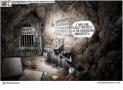
Despite these blind spots, the broad thrust of Obama's strategy is probably correct. In recent years, the Afghan war's focus has shifted from wiping out terrorism in that country to helping it build modern, democratic institutions. The latter, however, is a project of millennial ambition and little real relevance to America's national security interests. Limited American forces should stay in country to perform counterterrorism operations, ensuring that a full-scale invasion will never again be necessary. But that's where the engagement should stop.
The great takeaway from this conflict may be that nation building - which the right had (correctly) eschewed prior to 9/11 - is a generally hopeless task. A decade of American investments of money and manpower couldn't alter the fundamentals of Afghan life. This, however, is not a lesson one should expect to hear articulated by Obama. The reason? The idea that central planning does not work abroad carries with it a fatal corollary: it may not work here either. |