|
Placing an arbitrary ban on an object with religious significance will not still the fervor of true believers.
|
|
| In the six and half decades since the conclusion of World War Two, Europe – the fountainhead of western liberalism – has been slowly but systematically divesting itself of everything that made it the world’s powerhouse continent for most of the second millennium A.D.
The system of nation-states solidified by the Treaty of Westphalia in 1648 is eroding under the aegis of the European Union and its undemocratic centralization of power. The market capitalism first comprehensively articulated by the Scottish moral philosopher Adam Smith in 1776’s The Wealth of Nations has given way to the infirmities of social democracy and its attendant welfare states. And the continent that produced Nelson, Napoleon and Clausewitz has become institutionally pacifistic, laboring under the fantasies of international law, multilateral diplomacy and the United Nations – a delusion subsidized by the hegemonic power of the United States.
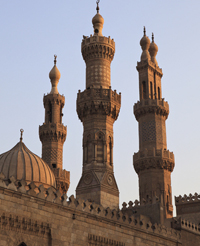
Suicide, it turns out, is a difficult process to interrupt in media res. That’s the lesson to be learned from the November 29 referendum in Switzerland in which 57.5 percent of Swiss voters cast a ballot in favor of prohibiting the construction of minarets, the tall spires that are a hallmark of Islamic mosques. Galvanized by the deluge of Muslim immigrants from the Middle East, Central Asia and North Africa that have poured into European nations in recent years, the Swiss electorate struck back at fears of the continent’s growing Islamization.
European and American elites have been quick to paint the referendum’s results as the result of a xenophobic public insufficiently reconciled to 21st century multiculturalism. The Swiss newspaper Le Temps called the vote a “brutal sign of hostility” to Muslims that was “inspired by fear, fantasy and ignorance.” Yet with informal polls in Spain, France and Germany showing overwhelming majorities in accord with the Swiss decision, dismissing the minaret ban as mass hysteria is imprudent. That it should take root in a nation with as long a history of religious tolerance as Switzerland only makes it more salient.
Switzerland is not a country with an Islamic minority nearly as pronounced as its neighbors. With an estimated 400,000 worshippers of Allah, the country’s population is only five percent Muslim. And only four mosques in the nation actually boast the minaret. By nearly all measures, the diminutive population of Swiss Muslims is not nearly as radicalized or unassimilated as the Islamic populations of nations like England or France. So why all the fuss?
The answer is likely that the Swiss are aware of the demographic time bomb that will see Muslim populations explode in Europe through reproduction and immigration while native Caucasians decline as a percentage of the citizenry due to plummeting birth rates. With the Islamist segment of this growing population making itself known through terrorist attacks, street riots and targeted murders, Europeans are beginning to fear that not only are they losing a once-great civilization; they also may be giving it over to the forces of barbarism.
Leading Islam scholar Daniel Pipes has theorized that the collision course between native Europeans and Muslims on the continent will play itself out in one of three ways: (1) harmonious integration; (2) an Islamic triumph in Europe, or (3) a spirit of resistance to the Muslims among native Europeans bearing a resemblance to the continent’s fascist past. At present, the Swiss vote seems to indicate an inclination towards the third option.
In the end, however, this may be an example of too little, too late. Placing an arbitrary ban on an object with religious significance will not still the fervor of true believers. Had Europe seriously considered its cultural trajectory decades ago, it may have been decidedly more circumspect in its immigration policies and less tolerant of ideologies aimed at destroying the continent’s legacy of liberty. That could have been ample to stave off the forces of decline. With that option foreclosed, however, all that’s left is a rearguard defense. It’s a battle between those who would gladly die for their beliefs and those whose idea of cultural triumphalism is regulating architecture. Place your bets.
|