




|
|
|


| It’s 10 p.m. Do You Know Where Your Governor Is? |
 |
|
By CFIF Staff
Thursday, October 01 2009 |
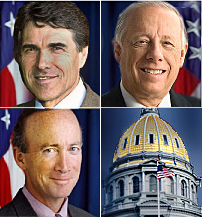
Specifically, do you know your governor’s position on the various proposals for national “health care reform?” This is important, because if they are representing the interests of their states, all 50 should be opposed, to the point of focused, vocal opposition – and more. Trying to count the losers, not to mention quantify and characterize their losses, under the various proposals has become an impossible task. It is impossible because of the complexity of the plans. Part of the complexity of the plans is intentional, a blatant attempt to hide the true costs of the plans, to deceive regarding the true costs of the plans, and who will pay those true costs, until passage. But there are 50 governors in this country who can calculate the impact on their states, which means your states. Some have already done so, and those who have not are delinquent. The principal (but far from only) problem for the states is forced expansion of Medicaid, a shared expense with the federal government, but already coming apart at the seams in many states, which must, on average, pay about 43 percent of Medicaid costs. (It is also arguably the worst of all existing government health care plans and perhaps in and of itself one of the strongest arguments against any expansion of government bungling.) Governor Rick Perry of Texas, a Republican, estimated last week that the additional imposition on Texas could be double the number of Texans insured by Medicaid, at a 10-year additional cost of $60 billion. Governor Phil Bredesen of Tennessee, a Democrat, has spoken more colorfully, referring to “the mother of all unfunded mandates” and calling Medicaid a “poor vehicle for expanding coverage.” Bredesen is a former health care executive, well positioned to speak from a position of knowledge. Governor Mitch Daniels of Indiana, a Republican, and probably the best numbers cruncher among all U.S. elected officials, has said the proposals could do “serious damage” to Indiana, forcing ultimate additional costs of up to $724 million a year. The list goes on, of Democrat and Republican governors who have spoken, written and wrung their hands, but thus far little else. In attempting to buy off gubernatorial opposition, the Senate Finance Committee bill (the Baucus barrel roll) would federally fund 77 to 95 percent of additional state costs for an initial five years. For some governors, given their average tenure in office, that may be enough of a political sop to at least mute their voices, but for those of you who will live in your states longer than five years, just guess where the costs go then. (Do you know which state will now get 100% because the Senate Majority Leader is in grave danger of being tossed out of office, come about 2010? That’s right, you get to pay your share plus some of Nevada’s.) Collectively, governors constitute the 50 most powerful lobbyists in the country, if they put their minds and efforts to it, which is rare, but in this case more than demanded. Publicly, they can do a lot. Privately, most can do even more because of their greater control of state political organizations and state political money than those who get lost in Washington. That political clout provides such exceptionally large cans of whup ass, just to be candid about it, most Washington politicians would much rather attend a contentious Town Hall with you than a contentious private meeting with the governor. The point of all this is direct. While you are faxing, calling, writing and visiting with Representatives and Senators to oppose “ health care reform” (you are doing that daily, aren’t you?), also go enlist the best lobbyists you can get, by faxing, calling, writing and visiting with your respective governors. Their interests in stopping the monstrosity are the same as yours, if they are truly representing you.
|

Related Articles : |
