



|
|
|














| Congress Considering America’s Version of Egypt’s Internet 'Kill Switch' |
 |
|
By Ashton Ellis
Tuesday, February 01 2011 |
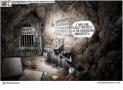
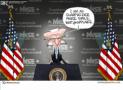
With the Egyptian government repeatedly jamming its citizens’ access to the Internet during the country’s ongoing protests, one bill making its way through the U.S. Congress is getting heightened scrutiny. Originally titled the “Cyberspace as a National Security Asset Act of 2010,” the bill has been dubbed by critics as the “Internet kill switch bill.” If passed, it would give President Barack Obama the power to order private companies to shut down their online activities. Technically, the bill must be reintroduced since it failed to pass both houses of Congress before the lame duck session ended. In a recent announcement, Senator Susan Collins (R-ME) plans to do just that. Supporters of the bill’s 2010 version, including co-sponsoring Senators Joe Lieberman (I-CT), Tom Carper (D-DE), along with Collins, claim the president’s ability to turn off Internet access would only apply during national emergencies. If a private company maintains a system or asset the Department of Homeland Security (DHS) considers part of the government’s “critical infrastructure,” the president would have plenary power to order a shutdown. Amendments accepted in Lieberman’s Senate Homeland Security Committee last December lowered the threshold for being considered critical infrastructure. The legislation gave three requirements. First, disruption of the company’s computer system could cause “severe economic consequences.” Second, the company’s computer system “is a component of the national information infrastructure.” Third, the “national information infrastructure is essential to the reliable operation of the (private company’s computer) system.” Collins’ reintroduced version would likely include those amendments as part of her base bill. One of those amendments expressly eliminated judicial review, meaning that any decisions made pursuant to a cyber threat national emergency would be unreviewable by a federal court. This includes giving sole discretion to DHS Secretary Janet Napolitano for deciding which private companies are part of the nation’s critical infrastructure. Appeals of her decisions go to…her. Score one for Orwellian oversight. But wait; there’s more. In order to entice technology industry members into supporting (or at least not opposing) the bill, the Senate Homeland Security Committee also inserted language immunizing private companies from lawsuits by customers injured from disruptions in service due to a shutdown order. Moreover, the U.S. Treasury would be responsible for reimbursing for economic damages due to a shutdown, making U.S. taxpayers, once again, the backstop for government meddling. The bill is also dense in its discussion of creating new layers of bureaucracy. The centerpiece of the new regulatory apparatus is the creation of the National Center for Cybersecurity and Communications (NCCC) inside DHS. The NCCC would be headed by a Senate-confirmed director reporting directly to DHS Secretary Napolitano. The idea is to house the department’s cyber security coordination in one place, but the turf staked out for the NCCC director is arguably already patrolled by other high level DHS officials. Nonetheless, the bill authorizes the NCCC director to have “no less” than two deputy directors with whom to extend his reach. But for all its focus on personnel, Collins’ forthcoming bill is vague in outlining which kinds of circumstances would merit being called national emergencies. The approach is to give the president the widest latitude possible. In practice, that will leave an almost limitless field of action open to the president to define and exercise his powers. With the same authority granted by Collins’ bill, a president will be able to control access to the Internet whenever he deems it necessary. That kind of expansive executive discretion should trouble every American. Egypt’s government stymied protesters’ attempts to coordinate activities via Internet-based social networking sites like Facebook and Twitter. When Secretary Napolitano released reports warning about the dangers to national security posed by Iraq and Afghanistan war veterans, pro-life organizations and limited government advocates, it did not take much to envision targeted shutdowns of those groups’ activities, including Internet access. It’s time for the liberals in Congress and the Obama Administration to remember that American civil liberties apply to Americans too. |

Related Articles : |
