

















| Is the USA Going Bankrupt? |
 |
|
By Stephen Moore
Wednesday, August 26 2026 |
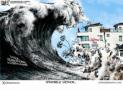
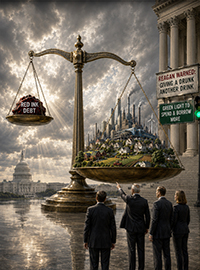
Thank God, no, we aren't going bust as a nation, despite our gargantuan $40 trillion national debt. The rapid pileup of debt under Republicans and Democrats alike is certainly a disgrace and worrisome. When I came to Washington in the mid-1980s, our debt hit $1 trillion for the first time. It seemed like a tidal wave of red ink. Forty years later, we're at $40 trillion. That's a big and scary number. But our national wealth is roughly $180 trillion. So our debt-to-asset ratio, which has been rising, is still less than 25%, and much lower than at the end of World War II, when the debt hit 40% of wealth. We haven't been borrowing to fight a war, but the main point is that even with a debt overhang that was a lot larger than today, we had a post-WWII boom. That's not all. Almost $8 trillion of that debt is money the government owes to itself. For many years Congress has been stealing money from "trust funds" like Social Security. It's accounting hokey pokey, and if a private company raided a pension fund like this, they'd lock up the CEO for fraud. But this isn't debt owed to the public or foreigners. It would be like a wife loaning money to a husband. The money has to be paid back – but to ourselves. The main way to limit the negative impact of the debt is through growth, prosperity and a rise in asset values. What matters most for a household, a business or a government is how much debt you owe relative to how much you have in the bank and how valuable your other assets that you can use to pay it back are. This means that any reform that lowers the growth rate of the economy, like a major job-killing tax increase, is likely to fail in solving the debt problem – and it may make it worse. These reforms also fail to acknowledge that we have more revenue coming in to the Treasury today than ever before. Tax increases will only give Congress the green light to spend and borrow more money. As Ronald Reagan used to say, never give a drunk another drink. Congress is drunk on spending. We should also never forget the advice of the late Milton Friedman, who used to say that he'd rather have a budget half as large as it is with a budget deficit than a balanced budget with government spending twice as large. He was right. Stephen Moore is a former Trump senior economic adviser and the cofounder of Unleash Prosperity, which advocates for education freedom for all children. COPYRIGHT 2026 CREATORS.COM |
Related Articles : |
