




|
|
|












| Obama’s Proposed Tax Increases Wage War on Civil Society |
 |
|
By Ashton Ellis
Thursday, March 31 2011 |
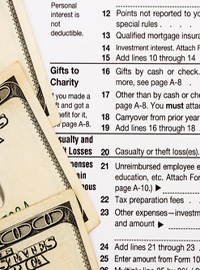
The Obama Administration’s proposed tax increases will reduce the amount of money available for charities from America’s largest givers. Instead, the federal government will reap a coerced windfall from higher taxes and lower deduction levels. A new report published by the Heritage Foundation, the conservative think tank, explains how the Obama Administration is putting a financial squeeze on America’s philanthropists. In February, the White House released its 2012 budget. If adopted, on January 1, 2012, the two top tax rates will increase from 35 percent to 39.6 percent, and from 33 percent to 36 percent, respectively. These hikes will apply to every individual making $200,000 or more and families making $250,000 or more per year. According to Heritage Foundation’s Ryan Messmore, “the total tax increases on upper-income families will cost them an estimated $709 billion over 10 years.” If you think that sounds like a lot of money, you’re not alone. So does the federal government. What makes the rate spike even more egregious is the other prong of Obama’s new tax plan: reducing the value of itemized tax deductions for higher-income taxpayers beginning on January 1, 2012. As Messmore points out, Obama’s 2012 budget proposes “lowering the deduction rate to 28 percent and raising the tax rate to 39.6 percent,” thereby reducing “the value of this deduction by 30 percent for donors in the highest tax bracket.” So, while the tax rate increase gobbles up more money, the lower deduction reduces the amount that can be given to charity without penalty. Working together, these two proposals extract more money from America’s wealthiest donors to fund the ever-increasing entitlement state. Just like other nationalization projects such as ObamaCare, this shift in policy is enriching the public sector at the expense of the private. One of the big reasons donors give money to charity is to make sure at least some of their money goes to causes they support. With huge chunks being sliced away through taxes for inefficient social services, it’s no wonder many Americans think it more cost effective (and moral) to achieve the common good by funding private charities. Along with declining donations, Messmore warns that Obama’s new tax proposals will shrink civil society’s role in providing social welfare. “This ‘crowding out’ occurs when government claims increasing responsibility for tasks traditionally performed by civil society and absorbs a larger percentage of the resources dedicated to carrying out those tasks. This phenomenon can be seen in many policies that expand government’s role in society.” One example Messmore gives is the Medicare Part D expansion in 2003 that crowded out private coverage at a rate of 72 percent. Before the expansion, two-thirds of Medicare enrollees received prescription drug coverage from a source other than government. Afterwards, the government paid for five of every seven prescriptions. It’s too bad a president with a Nobel Peace Prize continues to wage war against the private economy. If there are meetings of Peace Prize recipients, it would serve the hope and change president well to ask fellow honoree Muhammad Yunus about social businesses. In Yunus’ book, Building Social Business: The New Kind of Capitalism that Serves Humanity’s Most Pressing Needs, the American-trained economist says state-run social welfare is a failure. It kills competition, efficiency and innovation. Social businesses, on the other hand, help citizens “to undertake activities which traditionally were considered the responsibilities of government. As a result, government’s burden is lightened, its efforts complemented by those of civil society.” The key feature of a social business is the middle ground it occupies between traditional for-profit businesses and non-profit charities. Like for-profits, it is a self-sustaining player in the free market. Like non-profits, social businesses do not pay dividends to investors. Instead, social businesses reinvest surplus revenues into expanding their service. In his native country of Bangladesh, Yunus has launched scores of companies that improve the quality of poor people’s lives. The ventures range from bottled water, nutrient-rich yogurt and cataract surgeries – all delivered at prices the poor (and the market) can afford. If the activist impulse in liberals like President Obama is ever to be productive, it’s time they looked seriously at policy options that grow financial and human capital instead of killing it. After all, wouldn’t America be a better place if its wealthiest citizens had more money to fund self-sustaining enterprises that actually improve people’s lives? |
Related Articles : |
