











| Obama Gripped by Intellectual Exhaustion |
 |
|
By Troy Senik
Thursday, August 01 2013 |
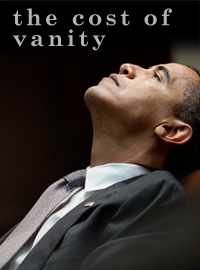
There are certain surefire signs that you’re losing in politics. Foremost among them: You spend a lot of time talking about the difficulty you’re having with “communications issues.” When politicians see their popularity decline, they like to tell themselves they just haven’t packaged their ideas correctly; that they just need a slightly sharper marketing hook and the electorate will be eating out of their hands. It’s easy to see the appeal of this line of thought. It’s a lot more psychologically comforting to believe that you’ve simply said something the wrong way than to acknowledge that the public has turned on you. That mindset, however, can lead stumbling politicians to seem oddly disconnected from reality. Think of the period in George W. Bush’s second term prior to the surge in Iraq. Bush treated the war’s failures as a communications problem, continually taking to the stump to reassure the public that the conflict was still on the right trajectory. But the voters didn’t need rhetorical reassurance. They needed tangible proof that things were getting better. Barack Obama finds himself in a similar position as he settles into his second term, although it’s doubtless more injurious to his ego than it ever was to Bush’s. Whatever his other virtues, our previous president was never lionized as the greatest orator since Cicero. Obama, by contrast, was a man whose words were supposed to be transformative. That wasn’t just the diagnosis of his disciples either – the president himself seemed to internalize it. When ObamaCare was struggling to win passage in Congress, the president gave a staggering number of speeches to buttress the bill – 54 from March of 2009 to March of 2010. For all that effort, the law barely passed and still remains unpopular with the majority of Americans. As some wags have noted, Obama’s poll numbers actually tend to rise on the rare occasions that he takes a vacation from speechmaking and stops being such a ubiquitous presence in American life. Four and a half years into his presidency, with an economy that’s improving in the same way that the flu is an improvement from pneumonia, you’d think that Obama would be beginning to get nervous about the prospect that his legacy will be forever marred by the record of a sluggish economy. And perhaps he is. But his response? More speeches. The president is spending the rest of the summer out on the road delivering his economic message, apparently believing that this time will be different than the dozens of occasions when he has previously “pivoted to the economy,” the phrase that the White House has had to retire because it has generated such intense ridicule (how many times can you pivot, one wonders, before you’re just going around in circles?). The substance of that message: meek, warmed-over liberalism. There’s a proposal for universal pre-school (because nothing will jumpstart the economy like an extra year of coloring books for people who will enter the workforce two decades from now); more federal benefits for green tech companies (because wind and solar power – which generate less than five percent of America’s electricity combined – are at the very heart of our energy needs); plans for the creation of “manufacturing innovation institutes” (because nothing says “creative dynamism” like government-funded efforts to replicate work already being done in the private sector), and, of course, an increase in the minimum wage (because compassion requires pricing poor people out of the labor market). Notice what’s not there. Nothing about taxes. Nothing about regulation. Nothing about harvesting a bounty of affordable energy. Nothing about bringing down the skyrocketing costs of higher education. It’s as if you asked someone to design a house and they came back to you with nothing more than a couple of ideas for window treatments. This is what a president in the grips of intellectual exhaustion looks like. Obama has already fired most of liberalism’s big guns. He’s turned healthcare essentially into a public utility. He’s raised taxes. He’s expanded regulation. He’s tried a nearly trillion-dollar stimulus. He’s shoveled money out the door to alternative energy companies. None of it has worked. And now all he’s left with is liberal detritus. If Obama hoped to make any real progress on the economy in the remainder of his second term, he’d have to jettison the left-wing ideology that got him to this point – and it’s clear that he’s too small a man for that. He’s not about to reexamine his first principles. Instead, he’ll continue on the death march of flailing politicians, believing that rhetoric can substitute for results. And all of us will pay the cost of that vanity. |
Related Articles : |
