




|
|
|










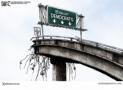
| Poll: Obama Has Driven Americans’ Confidence in Government to Record Low |
 |
|
By Timothy H. Lee
Thursday, September 19 2013 |
“In this present crisis, government is not the solution to our problem. Government is the problem.” Ronald Reagan, January 20, 1981 “The era of big government is over.” Bill Clinton, January 27, 1996 “We are five days away from fundamentally transforming the United States of America.” —Barack Obama, October 30, 2008 Successful leaders draw other people toward their points of view. Poor leaders and failed policies repel them. Since Barack Obama entered the White House, his presidency has rested on the philosophy of expanding the size and power of the federal government to transform our lives. Openly and explicitly striving to achieve a “legacy” presidency, he intentionally chose a path directly contrary to the one chosen by Ronald Reagan and even Bill Clinton. Spending climbed to record highs. Deficits also spiked to unprecedented highs. A nearly $1 trillion wasteful “stimulus” bill was passed. The number and reach of federal regulations reached record levels. Military and diplomatic strength were rejected in favor of retreat, conciliation, apology and even literal bowing to foreign leaders. Allies like Israel, Britain and Poland were publicly humiliated, while enemies like Hugo Chavez and Vladimir Putin were foolishly embraced. Four years later, the results of his leadership have become clear. Obama hasn’t drawn Americans toward his worldview, he has driven them away. As succinctly summarized by the headline of a new Gallup survey, “Fewer Americans than Ever Trust Government to Handle Problems.” Periodically since 1973, Gallup has separately measured Americans’ trust in government to address both foreign and domestic problems. In the aftermath of Watergate, trust plummeted from approximately 70% both domestically and abroad to 56% abroad and 49% at home. Throughout the following four decades, trust in both areas generally hovered in the 50% range domestically and 60% internationally, with steady increases during the Reagan, Bush 41, Clinton and even Bush 43 administrations. Under Obama, however, our collective trust has dropped to several consecutive record lows in terms of both foreign and domestic affairs. After four years of administration impotence abroad, from North Korea to Iran to Russia to Libya to Syria, a new low of 49% of respondents say that they maintain confidence in our ability to handle international problems. That reality must particularly chafe Obama and his remaining loyalists, since his raison d’être as a candidate and president was abandonment of his predecessor’s more muscular diplomacy in favor of a conciliatory agenda focused on his presumed power of personality. Four years under Obama have soured Americans even worse when it comes to domestic affairs, according to Gallup: “Americans also expressed historically low levels of confidence in the federal government’s ability to handle domestic problems, with 42% reporting a ‘great deal’ or ‘fair’ amount of confidence. This is one point below the previous low of 43% in 2011. Americans’ confidence in the federal government on domestic problems, as was true for international issues, peaked in the October post-9/11 poll, when 77% expressed confidence. Confidence then trended downward throughout the 200s, and has sunk to several new lows since 2010.” This current state of affairs is simultaneously disturbing and reassuring. It is disturbing because it captures the fraying fabric of American political life, a growing sense of despair and distrust. But it is reassuring because it suggests that Americans have awakened to the failures and dangers inherent in a more powerful federal government. The results of Obama’s big-government agenda have been an unprecedented credit downgrade, continually decreasing median incomes even though the recession ended five months into his tenure, unemployment above 8% for a record number of months, an alarming workforce dropout rate, record numbers of Americans living in poverty, nearly twice as many people on food stamps, impotence abroad and disillusionment among our allies. In recent days alone, we’ve witnessed what seems like a reversal of our Cold War victory over the Soviet Union, with former KGB agent Vladimir Putin running diplomatic circles around a befuddled Obama who weakly promised him more “flexibility” in a second term. It all makes for an interesting paradox. Presidents like Reagan and Clinton who publicly commit to moderating federal government expansion have increased Americans’ trust in government competence. In contrast, President Obama seeks at every turn to enlarge the federal government, but has degraded trust in it to all-time lows. We can thank Obama for few things, but reaffirming Reagan’s observation that government has become more of a problem than a solution is one of them. |

Related Articles : |
