




|
|
|



| The State of the Union and the State of the Presidency |
 |
|
By Troy Senik
Thursday, January 30 2014 |
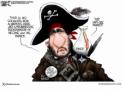
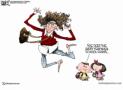
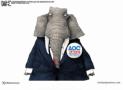
Back in 2008, one of the McCain campaign’s repeated attacks on Barack Obama was that he was more of a celebrity than a statesman. Based on the ratings for this week’s State of the Union address, the president ought to be glad that he chose Washington rather than Hollywood. If this presidency was a television show, it would’ve been canceled by now. Obama’s Tuesday night sermon garnered lower rankings than any State of the Union address during George W. Bush’s tenure. Of Bill Clinton’s eight installments of the speech, only his 2000 valedictory scored more abysmal numbers. This is a president who’s fatigued the country into indifference. Obama, of course, isn’t unique. Modern presidents have a tendency to wear out their welcome rather quickly. Even their admirers frequently grow sick of them by the time they’re in the midst of the second term, a lethargy only compounded by the relative powerlessness of a president in his waning days in office. There’s more to this trend, however, than the natural decay of presidential grandeur. What ails modern presidents — especially Obama, whose lust for media adoration is bottomless — is overexposure. With 24-hour news cycles and the proliferation of media, our commanders-in-chief feel the need to be everywhere, all the time. If Obama isn’t chatting up David Letterman, he’s stopping by The View — that is, if he’s not calling into a hip-hop radio station or filling out his March Madness brackets on ESPN. This isn’t just a marketing problem, however — it goes to the very heart of the presidency’s increasing institutional dysfunction. Flip through the transcript of this year’s State of the Union and you’ll find Obama riffing on everything from childhood obesity to the television show Mad Men. If there was a corner of American life left untouched, it wasn’t for a lack of effort. What’s wrong with this cafeteria approach to the presidency? Well, for one thing, it makes a mockery of the concept of limited government. That, alas, is not a new innovation. The bigger issue is that a presidency that’s about everything inevitably becomes a presidency about nothing. Thus do we get the bizarre spectacle of speeches like this week’s, where the President of the United States devoted roughly equal time to chemical weapons in Syria as he did to the development of high-tech manufacturing hubs in North Carolina. The biggest fiction about the presidency — indeed, one that many presidents enter office believing—is that the office’s powers are virtually limitless. In reality, even presidents who interpret their roles as capaciously as possible wind up only being able to tackle a few major issues. The temptation to chase every fleeting policy issue only detracts from that limited influence. Presidents themselves, however, can’t be much blamed for this trend. Who wouldn’t succumb, after all, to such illusions of mastery? The real blame falls upon the public, which has largely bought in to the notion of our chief executive as a national totem — a Caesar by ceremony, if not by influence. We want our presidents to be media icons, best friends and national healers, just as much as we want them to be competent stewards of the nation’s future. That is too much to ask of any one man or woman. As President Obama’s tenure winds down, it’s likely that his relevance will only continue to decline. A fickle public, having drained him of his mystique, has now grown bored with a man who has been revealed to be little more than an incompetent manager and a one-trick orator. Such is the fate of modern presidents when the romance runs dry. This need not always be the trend, however. Presidents consistently fall out of favor when their grandiose promises are dashed against the rocks of reality. Perhaps the public would be less disappointed if they stuck to the nuts and bolts of the job and didn’t promise the world in the first place. |
Related Articles : |
