























| What Would a Real “Change Election” Look Like? |
 |
|
By Troy Senik
Thursday, August 14 2014 |
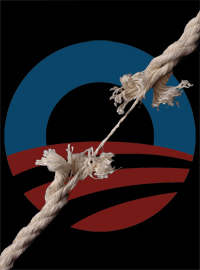
By all accounts, November’s midterm elections look likely to deal a decisive rebuke to the Obama Administration, currently at a nadir in public opinion. Should Republicans retake the Senate — an outcome that looks exceedingly plausible — they’ll control both houses of Congress, as well as holding a slim (though unreliable) majority on the Supreme Court. But what will the effects of that victory look like in real terms? To be sure, Republican control of Congress virtually assures that Barack Obama’s final days in office will be devoid of any major legislative accomplishments. That’s not exactly a new development, however. Obama’s essentially been bottled up in Congress since the GOP retook control of the House of Representatives in 2010. That’s part of the reason that the president has leaned so heavily on executive action in recent years. There would be incremental benefits, to be sure. A Republican majority would bring functional veto power over President Obama’s nominees and give the GOP more opportunities to launch investigations exposing administration malfeasance. Those are both weapons, however, that are of least utility in the last years of an administration, when a president has already installed most of his appointees and when the political press will be more focused on the upcoming presidential election than on scandals emanating from an increasingly irrelevant White House. Here’s what a Republican majority won’t bring: serious policy reforms along the lines of those favored by conservative intellectuals. Short of a political conversion the likes of which we’ve never seen before, it’s unlikely that President Obama is going to discover his inner moderate and close out his presidency signing legislation that dramatically overhauls taxes, cuts regulations, shrinks the footprint of the federal government or reforms entitlements. Such grandiose ambitions will have to await a Republican president. So what does a GOP congress do without the executive branch? It’s something of a truism in American government that political parties don’t have an identifiable leader when they aren’t in possession of the White House. A Speaker of the House, a Senate Majority Leader or a party chairman don’t have nearly the unifying ability of a president in our increasingly executive-centered system. That’s exactly the reason that congressional Republicans should wait on a presidential nominee to lay out their proactive agenda — and instead spend the next two years aggressively defending the rights of the legislative branch. The first and most important step on that road is challenging the president’s abuse of executive power, such as the de facto amnesty that is likely coming later this year. In some cases, that will mean taking issues to the courts; in others, it will mean utilizing the power of the purse to cut off any funding for initiatives that step on the legislative branch’s rightful lawmaking authority. That’s only the beginning, however. Congressional Republicans should launch a sustained effort to weaken the grip of the administrative state on American law. Too few Americans realize just how many of the laws they live under never receive even the most basic scrutiny from their elected officials. Mammoth bills like Obamacare and Dodd-Frank are little more than massive delegations of power to the executive branch, their pages filled with authorizations for cabinet secretaries and agency heads to set the actual policy that legislators are elected to enact. Congress has power to review those rules, but their sheer volume ensures they never receive much scrutiny unless they run afoul of some influential lobbyist. The concept of self-government is reduced to a mockery when it means little more than electing representatives who vote ‘yes’ on bills they haven’t read, giving power to bureaucrats they won’t hold accountable. From HHS’s contraception mandate to the EPA’s greenhouse gas regulations, some of the most sweeping and controversial actions taken by the federal government in recent years came out of the bowels of the executive branch rather than from elected lawmakers. This practice persists because both political parties know that it works to their benefit when they control the executive branch, allowing them to shape policy to their preferences without ever having to take a potentially controversial vote. It’s no surprise that liberals embrace this approach. It was the progressive movement, after all, that first advanced the idea that constitutional checks and balances were an unnecessary hindrance to government action and that Americans would be better off with unelected “experts” guiding their affairs rather than elected representatives. Conservatives, however, should know better. As defenders of the constitutional order, they should work wherever they can to undo these undemocratic practices and hold government more directly accountable to the people. If they can find the will to do so, then 2014 will truly earn the distinction of being a “change election.” |
Related Articles : |
