|
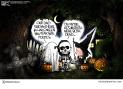
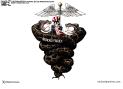
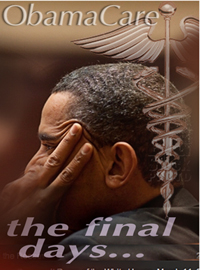
The more time has passed, the more it has become clear that Obama’s decision to make health care the focus of his Administration’s early days was at best ignorant of public sentiment and at worst openly contemptuous of it.
|
|
| If George W. Bush was country music personified and Bill Clinton was smooth jazz, Barack Obama is Wagnerian opera. There’s something about our 44th president that pines for drama – whether in the shape of a make-or-break speech or an against-all-odds campaign. Read either of Obama’s best-selling books and you’ll see this. The commander-in-chief is an extremely lyrical author, despite the fact that little in his pre-presidential life justified the purple prose. His eloquence is little more than a primal scream inspired by the banality of everyday existence.
This approach has its advantages for Obama – he is about as effective a proselytizer as modern American politics has produced. His sense of the transcendent seemed to resonate with voters who had stopped expecting any dignity from government by the time the 2008 election came around. But Obama’s gift for dramatic rhetoric contains the seeds of its own destruction – for two reasons.
First, it’s not nearly as hard to sell happiness as it is to deliver it. Part of the reason that Obama could coast to electoral victory on empty messages like “hope” and “change” is because they were vessels for his most pliable followers to fill with imagination – until he was forced to act, he truly could be all things to all people. He created unity by harnessing opposition to the status quo and left the yeoman’s work of forging consensus around an alternative for later.
Second, if everything is a defining historical challenge, nothing is. During the campaign, Obama – as the first serious African-American presidential candidate – could legitimately claim to be treading where no man had before. Since taking office, not so much. Yet he marshals grand rhetoric at every turn.
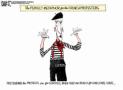
Despite his mantra that health care reform can’t wait, for instance, it’s been biding its time since at least the presidency of Theodore Roosevelt. Similarly, the nation’s economic and foreign policy challenges, while certainly dire, don’t deviate much from the median of American experience – yet they too seem to inspire Obama’s inner Virgil. The president’s rhetoric on all these fronts hasn’t been merely breathless; it’s been positively asthmatic.
With this hyperventilation, Obama has forsaken the lesson of the president he ostensibly emulates, Abraham Lincoln, who said “Public sentiment is everything. With public sentiment, nothing can fail; without it nothing can succeed.” It was Lincoln’s profound insight to realize that leadership in a democracy hinges primarily on finding the sweet spot between leading and following public opinion. One need only look to the Civil War’s progression from a war to preserve the union to a war aimed at abolishing slavery to understand how supple Lincoln’s threading of that needle was.
As on so many other issues, however, Obama took style points from Lincoln while ignoring substance. The more time has passed, the more it has become clear that Obama’s decision to make health care the focus of his Administration’s early days was at best ignorant of public sentiment and at worst openly contemptuous of it. With trust in Washington at an all time nadir, he proposed one of the most radical expansions of federal power in history. With debt exploding, he endorsed a new entitlement that would cost over a trillion dollars in its first decade alone. And despite an intoxicating campaign message of national unity, Obama now proposes to pass health care on a more partisan basis than any major piece of social legislation in American history.
Obama’s miscalculation has been so severe that he has now essentially given up the first half of his term in office to one initiative that still stands only an even chance of passing, with the barest minimum of votes. Though this was supposed to be the year of “jobs, jobs, jobs,” health care has already eaten up the first quarter of 2010. Whether it fails or succeeds, it will be followed by the midterm campaign season, not another substantive policy push.
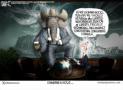
When all is said and done, Barack Obama will have sacrificed two years of what may well be a four-year presidency to a proposal that threatens the nation’s economic health, undermines individual liberty, enrages the public and reduces the political dominance of his own party. Presumably, he thinks that is an acceptable cost in order to one day have his name emboldened in a history textbook. But what he may be overlooking is that, even if his signature initiative passes, his recklessness has laid the predicate for its repeal. As Oscar Wilde had it, “when the gods wish to punish us, they answer our prayers.”
|