




|
|
|













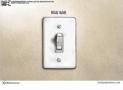

| Obama to FCC: Let's Regulate the Internet |
 |
|
By Timothy H. Lee
Thursday, November 13 2014 |
The Internet has done just fine over the past two decades without Barack Obama's oversight. So naturally, amid his other post-election tantrums, he now wants to begin regulating Internet service like an old-fashioned utility. That is not hyperbole. This week, perhaps in a fit of vindictive defiance following his humiliating electoral rebuke, Obama lectured the nation that his Federal Communications Commission (FCC) should begin regulating Internet service under Title II of the Communications Act of 1934, which was crafted for Depression-era railroad and telephone networks. The heart of Obama's latest effort is the longstanding leftist holy grail known as "Net Neutrality." Net Neutrality would in practice be anything but "neutral," as it would actually end the federal government's general "hands off" approach to the Internet. In its place, the FCC would effectively introduce price controls and impose a nationwide one-size-fits-all business model upon Internet service providers. More specifically, it would prevent service providers from addressing Internet traffic congestion and capacity burdens by prohibiting such things as priority delivery or "fast lanes" for bandwidth hogs. It would be like federal bureaucrats prohibiting UPS, the Post Office or FedEx from offering priority service, as if that option somehow penalizes customers opting for standard service. Making matters worse, Obama seeks to impose this model on the growing wireless sector, which is also witnessing revolutionary innovation without his interference. The problem is that Internet growth and congestion require that service providers remain free to experiment and allocate capacity more efficiently. Such experimentation is the very basis on which Internet service has advanced, and without that freedom to experiment, the innovation that we've witnessed over the past two decades will suffer. For instance, lifesaving medical data might be delayed by your neighbor downloading movies on Netflix or YouTube, which consume approximately half of Internet capacity during peak hours. That can degrade availability and speed for other users, unless network providers are allowed the freedom to experiment with different network allocation options. That's where Obama's effort to regulate Internet service via Title II comes in. His FCC has twice attempted to impose Net Neutrality through FCC regulatory diktat, but on both occasions federal courts have rejected those attempts as illegal overreach. In response, his administration is now moving to Plan C, which is to regulate the Internet under Title II, 80-year-old laws created for old-fashioned telephone service. In other words, Obama demonstrates as much contempt toward judicial rebukes as he does toward electoral rebukes. Obama claims that the federal government must intervene in order to preserve online innovation, which makes one wonder whether he has ever pondered for a moment how online innovation has occurred to date without his watchful eye. Perhaps Senator John Thune (R - South Dakota) summarized Obama's latest rogue effort best this week: "The President's call for the FCC to use Title II to create new Net Neutrality restrictions would turn the Internet into a government-regulated utility, and stifle our nation's dynamic and robust Internet sector with rules written nearly 80 years ago for plain old telephone service. The President's stale thinking would invite legal and marketplace uncertainty, and perpetuate what has needlessly become a politically corrosive policy debate." Confirming Senator Thune's foresight, AT&T announced in the aftermath of Obama's announcement that it must pause investment in providing fiber connection to 100 cities because of the policy uncertainty that he has introduced. Chief executive Randall Stephenson lamented, "We can't go out and invest that kind of money deploying fiber to 100 cities, not knowing under what rules those investments will be governed." Fortunately, the American public apparently isn't fooled by Obama's radical attempt. According to a new Rasmussen survey released this week, fully 61% of respondents oppose FCC regulation of the Internet in the manner Obama proposes, compared to just 26% who favor the idea. Additionally, 56% believe that free market competition offers the best protection of Internet innovation, while only 19% say that government regulation is preferable. Some 76% also rate their Internet service quality as "good" or "excellent," compared to only 5% who rate their service as "poor." Moreover, an overwhelming 68% majority recognizes that the FCC effort to gain regulatory control over the Internet stems from efforts to promote a leftist policy agenda. In other words, Americans overwhelmingly recognize that the Internet isn't broken, and it isn't in need of the "fix" that Obama seeks. So that's encouraging. The bottom line is that over the past twenty years, the Internet has transformed our lives more rapidly and more profoundly than any innovation in human history. And that occurred precisely because the federal government, beginning with the Clinton Administration, rejected Title II regulation and assumed a light-touch regulatory approach, allowing Internet service to flourish. It is now up to Congress and the American public to preserve that environment in the face of Obama's post-election rogue efforts. |
Related Articles : |
