




|
|
|














21 October 2011
Tod Lindberg, Hoover Fellow and Editor-in Chief of the monthly journal "Policy Review," discusses U.S. policy toward regime change, military intervention and clandestine action, including the use of drones, to subvert a regime and the importance of examining cases on both sides of the ledger -- those in which the U.S. has intervened versus those in which it has decided against regime change.
0:00
0:00
Related Podcasts
29 May 2026
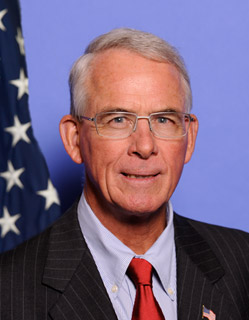
The Honorable Francis Rooney, former U.S. Congressman and Ambassador to the Holy See, discusses the Trump Administration’s foreign policy, the state of U.S.-Vatican relations, and Pope Leo’s Encyclical on Artificial Intelligence.
14 May 2026
Jeremy Nighohossian, Senior Fellow and Economist at the Competitive Enterprise Institute, discusses positive developments in healthcare, including changes in drug development, what the resignation of FDA Commissioner Marty Makary may mean for healthcare policy, and why Certificate of Need (CON) laws impede free market competition and access to care.

01 October 2015
Evan Moore, Senior Policy Analyst at the Foreign Policy Initiative, discusses how Chinese President Xi Jinping's visit comes in the midst of an extraordinarily contentious period in U.S.-China relations, particularly relating to issues involving diplomacy, economics, military advancements and cyber-hacking.

18 July 2014
Dakota Wood, Senior Research Fellow in Defense Programs at The Heritage Foundation, discusses foreign policy, how U.S. inaction around the world creates opportunities for our enemies, and whether any government can have leverage over Hamas in the Middle East.
28 June 2013
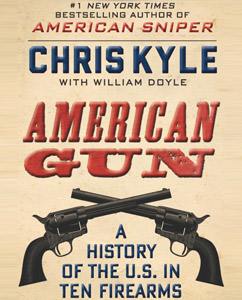
William Doyle discusses "American Gun: A History of the U.S. in Ten Firearms," the book he co-authored with the late Chris Kyle, bestselling author of "American Sniper." Doyle describes thrilling turning points in American history and the remarkable role that guns have had in shaping our great nation.
14 September 2006
Recently, Robert Sanchez, Director of Public Policy at the James Madison Institute, joined CFIF Corporate Counsel & Senior Vice President Renee Giachino to discuss oil prices and what the U.S. should do to increase domestic oil production.
