




|
|
|













28 April 2017
Catherine Engelbrecht, Founder of True the Vote, discusses a recent US District Court ruling that requires the IRS to turn over evidence of viewpoint based targeting, which singled out conservative and Tea Party groups for adverse treatment by the IRS.
0:00
0:00
Related Podcasts
06 February 2026
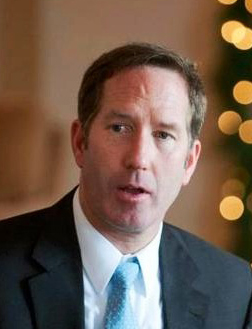
Timothy Lee, Senior Vice President of Legal and Public Affairs at the Center for Individual Freedom, discusses how efforts to target companies that sell entertainment tickets is counterproductive, why the free market should win over legislation that distorts the market, and what the recent U.S. Census tells us about the “science of democracy.”

21 February 2025
Pete Sepp, President of the National Taxpayers Union, discusses why IRS enforcement funding should be reallocated to agency modernization, why Congress should keep the corporate tax rate stable, and other areas of concern relating to taxes and the economy, including Medicare, Medicaid and tariffs.

09 November 2023
Dr. Keith Smith, Healthcare Expert and Cofounder and Managing Partner of the Surgery Center of Oklahoma, discusses how Medicare's dual payment scheme jeopardizes patient health, how site-neutral reimbursement provides transparency and allows the free market to step in, and other insights and lessons learned when bureaucratic bloat is taken out of the equation.

09 March 2023
Quin Hillyer, Writer and Editor, discusses why the IRS should be assessed penalties for failing to meet a deadline to submit a plan on how it will allocate the $80 billion in funds provided in the Inflation Reduction Act, American support for Ukraine, and what Republican Senator Tim Scott's speech in Iowa may mean for 2024.
04 November 2022
Timothy Lee, Senior Vice President of Legal and Public Affairs at the Center for Individual Freedom, discusses the U.S. Court of Appeals for the Fifth Circuit's recent decision ruling the Consumer Financial Protection Bureau's (CFPB) funding scheme to be unconstitutional, why the payday lending rule violates the Constitution's separation of powers, and how Congress created the agency that has too much unaccountable power.

19 December 2013
Bradley A. Smith, former Chairman of the FEC and Chairman and Founder of the Center for Competitive Politics, discusses the latest IRS power grab -- proposed IRS rules that, if approved, severely limit the free speech rights of 501(c)(4) not-for-profit organizations.
