




|
|
|








Load Newer Podcasts




15 October 2015
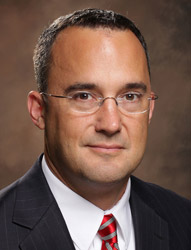
Quin Hillyer, Contributing Editor of National Review, Senior Editor for The American Spectator and Political Commentator, discusses the tax reform plans recently announced by some of the 2016 presidential candidates, the first Democratic debate, the importance of eminent domain on the campaign trail and pressure put on Paul Ryan to take the Speaker job.
09 October 2015
Timothy Lee, CFIF's Senior Vice President of Legal and Public Affairs, discusses college football without the threat of union politics, how Justice Breyer contradicts himself on the issue of courts and world politics, and why greater economic freedom means greater prosperity worldwide.
09 October 2015
Sarah Westwood, Investigative Reporter with the Washington Examiner, discusses the latest developments on Hillary Clinton"s private e-mail account and why some are calling for Clinton to face legal consequences as a results of her sworn declaration that she provided the government with all work-related communications.
01 October 2015
Evan Moore, Senior Policy Analyst at the Foreign Policy Initiative, discusses how Chinese President Xi Jinping's visit comes in the midst of an extraordinarily contentious period in U.S.-China relations, particularly relating to issues involving diplomacy, economics, military advancements and cyber-hacking.
01 October 2015
Francis Rooney, former United States Ambassador to the Holy See, discusses Pope Francis' first visit to the United States, what it means for U.S.-Holy See relations, and the political implications of the visit.
25 September 2015
Sally Pipes, President, CEO and Thomas W. Smith Fellow in Health Care Policy at the Pacific Research Institute, discusses how health insurance consolidation threatens to reduce quality of care and why ObamaCare has proven much costlier than anticipated.
25 September 2015
Ben Boychuk, CFIF's Contributing Editor, discusses how today's Republican Party resembles the Whig Party of 1850, why Donald Trump, Carly Fiorina and Ben Carson are popular candidates, and more.
18 September 2015
David Adesnik, Policy Director at the Foreign Policy Initiative, discusses America's defense and strategy issues as they relate to the Iran Nuclear Deal and why we need serious engagement on foreign policy issues by America's next president.
18 September 2015
Riley Walters, Research Assistant at the Douglas and Sarah Allison Center for Foreign and National Security Policy at The Heritage Foundation, discusses Heritage's interactive timeline of domestic terror attacks and plots since 9/11, how 2015 is the most dangerous year on record in terms of attacks and plots, and where the top targets exist in America.
11 September 2015
Clark Neily, Senior Attorney for the Institute for Justice, discusses his latest book, "Terms of Engagement: How Our Courts Should Enforce the Constitution's Promise of Limited Government," and the importance of and issues surrounding separation of powers, economic liberty, property rights, the Second Amendment, and more.
04 September 2015
Timothy Lee, CFIF's Senior Vice President of Legal and Public Affairs, discusses Hillary Clinton's conduct as Secretary of State, the Iran deal and how speech regulation is used to silence dissent.
28 August 2015
Sarah Westwood, Watchdog Reporter for the Washington Examiner, discusses why it is inconceivable that most of Hillary Clinton's emails were not classified and how the scandal may be prompting Vice President Biden to enter the 2016 presidential race.
28 August 2015
Quin Hillyer, Contributing Editor of National Review magazine and Senior Editor for The American Spectator magazine, discusses Donald Trump's visit to Mobile, Alabama, the "anti-establishment" commentary and his interview with Wisconsin governor Scott Walker.
21 August 2015
Mario Lopez, President of the Hispanic Leadership Fund, discusses why states should stand up to the Environmental Protection Agency regarding dangerous new climate regulations that, if imposed, will harm everyone, but minorities disproportionately with fewer jobs, lower incomes, higher energy costs and more poverty.
14 August 2015
Ryan Lovelace, Campaign Reporter for the Washington Examiner, discusses the good, the bad and the ugly from the first GOP presidential debate, as well as some of the takeaways from the recent RedState Gathering in Atlanta, Georgia.
Scroll to load more
