




|
|
|











Load Newer Podcasts




18 December 2015
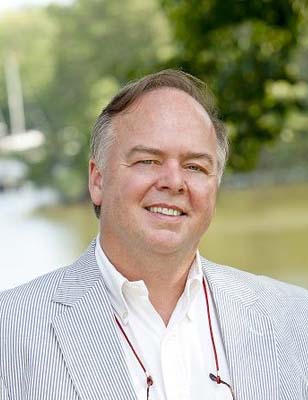
Bradley A. Smith, former Chairman of the Federal Election Commission and Chairman of the Center for Competitive Politics, discusses the continued fights over campaign-finance laws and why it's disheartening that the House Freedom Caucus objected to a proposal by Senate Majority Leader Mitch McConnell to lift the limit on how much political parties can spend in coordination with their candidates.
11 December 2015
Craig Shirley, New York Times bestselling author and President of Shirley & Bannister Public Affairs, discusses his latest book, "Last Act: The Final Years and Emerging Legacy of Ronald Reagan," and more about the 40th President of the United States.
04 December 2015
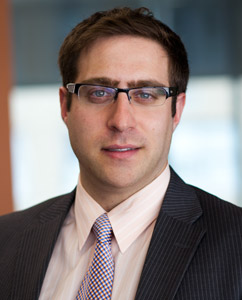
Dan Epstein, Executive Director of Cause of Action, discusses the oral arguments in Van Hollen v. FEC (a case in which CFIF is an intervenor-party) and why the court should not require non-profits that fund electioneering communications to be forced to release a full list of its supporters.
04 December 2015
Tod Lindberg, Research Fellow at Stanford University's Hoover Institution, discusses his recently released book, "The Heroic Heart: Greatness Ancient and Modern," why it is important to recognize and honor our heroes and whether there are heroes in politics.
25 November 2015
James Phillips, Senior Research Fellow for Middle Eastern Affairs at the Douglas and Sarah Allison Center for Foreign Policy Studies at The Heritage Foundation, discusses how the Paris terrorist attacks underscore the expanding threat posed by ISIS, the evolving ISIS strategy, forming a U.S. response to ISIS and what it means for Russia to "have skin in the game."
25 November 2015
David Adesnik, Policy Director at the Foreign Policy Initiative, discusses the Paris attacks, the price of U.S. inaction, ISIS' resiliency and the Syrian refugee crisis.
20 November 2015
Ben Boychuk, CFIF Contributing Editor, discusses the latest National Assessment of Educational Progress (a.k.a. "the Nation's Report Card"), how the adoption of Common Core education standards may be to blame for the drop in academic scores, and the challenges ahead for John B. King, President Obama's pick to replace Arne Duncan at the helm of the U.S. Department of Education.
20 November 2015
Joe Luppino-Esposito, Policy Analyst for Right on Crime and the Center for Effective Justice at the Texas Public Policy Foundation, discusses how criminal justice reformers with conservative principles have been a driving force behind new legislation aimed at reforming the federal and state prison systems and promoting alternatives to incarceration that lead to greater public safety, support for victims and protects taxpayers.
13 November 2015
Ike Brannon, President of Capital Policy Analytics, discusses why Puerto Rico is an economic basket case, how real fiscal reform is a necessary first step to fixing Puerto Rico, and why Governor Alejandro Garcia Padilla should not be given a free pass to violate Puerto Rico's constitution.
13 November 2015
Patrick Hedger, Policy Director of American Encore, discusses why Obama made the wrong decision on Keystone XL pipeline project and what it means for jobs, the economy and gas prices.
13 November 2015
Sarah Westwood, Watchdog Reporter for the Washington Examiner, discusses the mainstream media's criticism of Ben Carson, West Point and his biography, and Carly Fiorina's defense of her fellow Republican candidate.
06 November 2015
Judge Michael Warren, Oakland County (MI) Circuit Court Judge and Co-creator of Patriot Week, discusses why we need to invigorate our appreciation and understanding of America's spirit, how many current holidays have become overly commercialized or have lost their deeper meaning and how Patriot Week has captured the imagination and support of citizens across the nation.
30 October 2015
Gail Heriot, a Commissioner with the U.S. Commission on Civil Rights and a Professor of Law at the University of San Diego, discusses why she dissented from the Commission's report that recommended closing down immigration detention facilities, how the Commission panel went into this project intent on uncovering a scandal and why the Commission overstepped its bounds.
23 October 2015
Marita Noon, Executive Director of Energy Makes America Great and Citizens' Alliance for Responsible Energy, discusses the recent vote in the House of Representatives to overturn the oil export ban that has existed since the Carter Administration and what it could mean for our economy, tax base, jobs and energy security.
16 October 2015
Ilya Shapiro, Senior Fellow in Constitutional Studies at the Cato Institute and Editor-in-Chief of the Cato Supreme Court Review, previews the new Supreme Court term, cases on the docket, a decade of the Roberts' court and potential retirements and nominations.
Scroll to load more
