




|
|
|













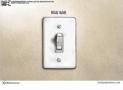

| Government Shutdown Reveals Extent of Federal Waste |
 |
|
By Troy Senik
Thursday, October 03 2013 |
You’d be surprised at how much government you’ll never miss. That seems to be the takeaway from this week’s partial shutdown of the federal government after Congress and the president were unable to come to an agreement on a continuing resolution to keep government’s doors open. First, let’s get some straw men out of the way. Contra Senator Harry Reid’s assertion that “Tea Party anarchists” wanted nothing more than to watch the world burn, even the most fervent advocates for small government don’t think twice about funding vital military, national security or public safety personnel. Nor do they want to see seniors stop receiving Social Security checks or see schoolchildren turned away from national parks. What these same limited government advocates understand, however, is that there are an awful lot of federal employees whose responsibilities are decidedly more superfluous than that. That isn’t just the opinion of Tea Party types – it’s actually the official policy of the federal government. That’s why, during the shutdown (perhaps more accurately described as a slimdown) federal agencies and departments made a distinction between essential employees who needed to remain on the job and “non-essential employees” who are dispensable enough to be furloughed. The results were telling. Certain organs of the government understandably required a greater portion of their workforce to stay on the job. In an extreme – and likely excessive – example, the State Department furloughed virtually none of its workers. The Department of Veterans Affairs kept 95 percent of its staff on board, while the Department of Homeland Security and the Justice Department kept 86 percent and 84 percent, respectively. Those numbers aren’t beyond the realm of plausibility for departments that are so essential to the basic functions of government. The story was different elsewhere, however. The Department of Labor kept on only 22 percent of its employees. The number was 20 percent at the Interior Department. The IRS has been getting by with only 9.3 percent of employees. At the Department of Housing and Urban Development, as well as the Environmental Protection Agency, only 6 percent of workers were listed as essential. It’s entirely possible that these numbers are artificially low given that they’re designed to respond to short-term concerns rather than long-term workforce needs. Still, any government agency or department that can continue to perform its essential functions with 1 in 5, 1 in 10, or even 1 in 20 of its normal staff must be adjudged to be unnecessarily bloated on a day-to-day basis. Moreover, it’s also clear that not even everyone who has stayed on the job has been vital to preserving the health of the Republic. Employees of the National Park Service, for instance, reported for duty on the National Mall on Tuesday in order to place barriers around sites like the World War II Memorial – an open-air amphitheater which, despite being open 24 hours a day, isn’t even staffed full-time under normal circumstances. The fact that the order to close the memorial site came directly from the White House Office of Management and Budget – and led to a media spectacle when World War II veterans who had traveled to Washington arrived to find it closed – demonstrates the pure political gamesmanship at work during the shutdown. In yet another triumph for the Greatest Generation, the veterans simply ignored the barricades and entered the grounds anyway. It turns out that life can go on undisturbed without a substantial chunk of the federal workforce – and that, in turn, means taxpayers are being bilked. A recent study by the Cato Institute’s Chris Edwards found that the federal government has 2.1 million civilian workers, whose pay and benefits will cost taxpayers $248 billion this year. To put that in context, cutting just over 17 percent of those costs would be sufficient to make up all of this year’s sequester cuts to defense. There are many unfortunate side effects of the government shutdown, but one of the benefits has been the way it has deflated a long-standing liberal conceit; one put into words by House Minority Leader Nancy Pelosi just last month when she said, “The cupboard is bare. There’s [sic] no more cuts to make [to the federal budget].” This has long been one of liberalism’s favorite rhetorical tropes: claiming that cutting even the slightest bit of government would reduce the nation to a primitive state. Now, however, we’re living in Madame Pelosi’s hellscape and you know what? It’s not much different – except for the fact that it’s considerably cheaper. Let’s hope the shutdown goes on just long enough for more Americans to realize that. |

Related Articles : |
