




|
|
|






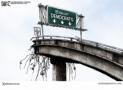
| Is Obama Even Interested in His Job Anymore? |
 |
|
By Troy Senik
Thursday, November 07 2013 |
The presidency is a trying job. We’ve all seen the iconic black and white photograph of John F. Kennedy leaning over his desk in the Oval Office, head bowed as if the weight of the world is literally upon his shoulders. Whatever the historical circumstances that precipitated that photograph, its real value is as a metaphor. As our current president is fond of noting, the questions that have to be decided by the President only get to his desk because they are too difficult to be answered elsewhere. It’s inevitable that such crushing responsibility takes a toll, particularly because chief executives never get a respite from it during their time in office. Keeping that in mind, we can forgive even presidents with whom we disagree when they occasionally seem to buckle under the weight of the office. That can’t, however, be an all-purpose excuse. A recent New York Times profile of President Obama’s decision-making during the September impasse with Syria noted a dismaying lack of engagement from our current Commander-in-Chief. As the piece’s authors (Mark Mazzetti, Robert Worth, and Michael Gordon) noted: “Even as the debate about arming the rebels took on a new urgency, Mr. Obama rarely voiced strong opinions during senior staff meetings. But current and former officials said his body language was telling: he often appeared impatient or disengaged while listening to the debate, sometimes scrolling through messages on his BlackBerry or slouching and chewing gum.” This is not a profile of fatigue so much as adolescent indifference. The only way this comes across worse is if an anonymous aide mentions that he noticed the president had earbuds in during these sessions. In a moment where he was tasked with fulfilling the most solemn obligations of his office—making decisions about war and peace—a glassy-eyed President of the United States acted as if his time was being wasted. How is it possible that someone occupying arguably the world’s most elite job could be gripped by such torpor? Well, the theory that the Washington Examiner’s Byron York advanced as early as 2010 was that Mr. Obama bores rather easily. York wrote at the time, “He’s in his second year as president, and he’s discovered that even with all the powers of office, he can’t do everything he wants to do, like remake America. Doing stuff is hard. In the past, prosaic work has held little appeal for Obama, and it’s prompted him to think about moving on ... Many observers have remarked that, even when dealing with the most momentous issues facing the country, Obama has seemed oddly removed from the hands-on work of making policy.” Examining the years that Obama has been on the national stage, this notion makes a certain amount of intuitive sense. The only areas where the president has demonstrated any real interest (to say nothing of talent) have been those relating to himself: the campaigns, the media appearances, the self-referential books. Rolling up his sleeves and engaging in the far less glamorous work of governing? He doesn’t really do that. Messiahs, after all, get someone else to trim the lawn. Where does this hollow, “is that all there is?” ethos come from? If you believe Obama aide and Olympian sychopant Valeria Jarrett, it stems from an excess of talent. In the 2010 book The Bridge: The Life and Rise of Barack Obama, Jarrett told author David Remnick, “I think Barack knew that he had God-given talents that were extraordinary. He knows exactly how smart he is. … He knows how perceptive he is. He knows what a good reader of people he is. And he knows that he has the ability — the extraordinary, uncanny ability — to take a thousand different perspectives, digest them and make sense out of them, and I think that he has never really been challenged intellectually. … So what I sensed in him was not just a restless spirit but somebody with such extraordinary talents that had to be really taxed in order for him to be happy. … He’s been bored to death his whole life. He’s just too talented to do what ordinary people do.” Well, that was the theory anyway. It turns out that he’s also too talented to engage with the most challenging job on the planet. In fact, he’s really great at everything—you’ll just have to take his staff’s word for it, because he won’t deign to actually show us. This is what happens when an entire career is built on ambition untethered from accomplishment. We elevated a man to the presidency whose career consisted largely of voting “present”—and now he’s doing the functional equivalent in the White House. Obama didn’t think he was too good for certain jobs; he thought he was too good for any job. Unfortunately for him, he is now, for the first time in his life, occupying a position in which he’s judged on the basis of performance rather than potential. Settling for “what ordinary people do” is probably beginning to seem a lot more appealing right about now. |
Related Articles : |
