




|
|
|













| Intellectual Property: As Global Economy Deteriorates, US Remains Atop International IP Index |
 |
|
By Timothy H. Lee
Thursday, February 11 2016 |
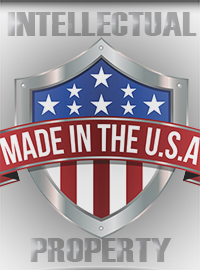
We're still number one. In the realm of intellectual property (IP) protection, that is. That feels refreshing to say, especially given America's steady and tragically unnecessary decline in other measures of global leadership and prestige in recent years. Moreover, as the global economy approaches what increasingly appears to be a dangerous precipice, America's IP exceptionalism doesn't just help explain why we've managed to weather the turbulence comparatively better than the economies of Europe, Japan and China. It also offers an encouraging sign that we'll continue to flourish in an increasingly knowledge-based global market. That depends, however, upon resisting threats to undermine America's IP standing, both domestically and abroad. The specific occasion for this latest opportunity to celebrate American exceptionalism is the release this week of the U.S. Chamber of Commerce's annual International IP Index. Even more specifically, it's worth celebrating that the U.S. remains atop the Index relative to the world's other leading economies. Each year, the Chamber's Index employs objective, quantifiable criteria to measure the relative IP environments of the world's 38 largest economies constituting 85% of worldwide output. Those six broad categories include patent, copyright, trademark and trade secret protections, as well as IP enforcement and commitment to international IP standards. Importantly, however, the Index doesn't simply measure each nation's relative IP performance. It also objectively illustrates how strong IP protections correlate with a nation's economic well-being. Simply put, stronger IP protections directly translate into more innovation, greater prosperity, higher levels of investment, more research and development, more creative content and more technological advancement, as the Index summarizes: - Access to finance: Economies with robust IP regimes are more likely to attract venture capital and private equity funding. In an increasingly competitive global economy that becomes progressively knowledge-based with each passing day, the importance for the U.S. of maintaining a legal and regulatory environment protective of IP rights becomes even more critical. Over more than two centuries, the U.S. has become the most innovative, prosperous and powerful nation in human history, without even remote competition. What nation in all of recorded history rivals our array of patented advancements, from the light bulb to powered flight to computer technology to lifesaving pharmaceutical and medical advancements? What nation has so dominated the world in terms of copyrighted content, from blockbuster films to popular music to literature to television entertainment? What nation has ever maintained such disproportionately high levels of valuable trademarks recognized instantaneously throughout the world, from soft drink logos to technological products that have revolutionized our lives? The simple answer is that no society rivals the U.S. in any one of those categories, let alone all of them simultaneously. And that is the direct result of America's tradition of strong IP protections. The Founding Fathers specifically protected IP rights in the text of the Constitution, and the U.S. has consistently led the world in protecting IP rights. The relationship between America's IP protections and our unrivaled innovation and prosperity therefore isn't coincidental, it's causal. Unfortunately, that doesn't mean that challenges don't remain. Domestically, some activists on both the political left and right actively seek to weaken American IP protections even when they ought to know better. And overseas, such threats as widespread piracy and efforts by foreign governments to weaken our IP protections so that they can achieve free rider status are cause for ongoing concern. But the good news is that strong IP protections have made us the world's most inventive and successful economy in world history, and this week's release of the Chamber's International IP Index shows that we maintain that position. Going forward in an increasingly challenging and information-based global economy, it's more important than ever that we keep it that way. |
Related Articles : |
