|
What’s most interesting, however, is how utterly irrelevant 'American Taliban' is to the world of 2010. That this book could be produced in the middle of a liberal reign in the White House and Congress reveals the deep intellectual insecurities pervading progressivism's sinking ship.
|
|
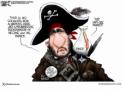
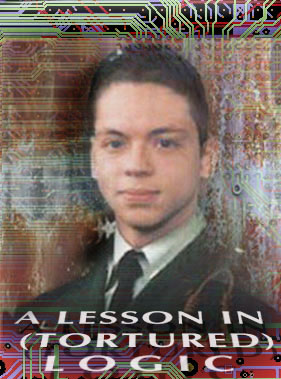
| Markos Moulitsas has a thesis, which is downright adorable coming from the founder of the Daily Kos, the liberal website that reads like it was written by Noam Chomsky’s id. That thesis? Conservatives are rough moral equivalents to Islamic extremists.
Lest this seem like right-wing sensationalism, let Moulitsas’ words speak for themselves. In the opening of his new book, "American Taliban: How War, Sex, Sin, and Power Bind Jihadists and the Radical Right," he writes:
“In their tactics and on the issues, our homegrown American Taliban are almost indistinguishable from the Afghan Taliban. The American Taliban – whether in their militaristic zeal, their brute faith in masculinity, their disdain for women’s rights, their outright hatred of gays, their aversion to science and modernity, or their staunch anti-intellectualism – share a litany of mores, values, and tactics with Islamist extremists.”
Beginning on the book’s first page, this passage is the tome’s high water mark for Moulitsas’ rhetorical powers. Thus, in two and a quarter centuries, the art of the polemic has devolved from the high style of Thomas Paine to the unwieldy hyperbole of a man who honed his literary chops on "Dungeons & Dragons" comment boards.
From its title to its cover (which features a turbaned, frowning version of the iconic yellow smiley face), “American Taliban” seems to be posturing for rank as the left-wing alternative to Jonah Goldberg’s 2008 bestseller, "Liberal Fascism." It’s a comparison Moulitsas shouldn’t have invited.
“Liberal Fascism” was primarily a serious work of history, punctuated by Goldberg’s trademark smart-ass-at-the-university-newspaper wit. “American Taliban” on the other hand reads like the product of a tabloid’s op-ed section, with no historical depth and a duster that boasts approving quotes from such intellectual giants as Roger Ebert, Janeane Garofalo, and singer Brett Gurewitz (sorry, you’re going to have to Google him just like I did).
Moulitsas’ six chapters each touch on what he holds to be the common canon of the conservative movement and worldwide jihad: power, war, sex, women, culture and truth. Put succinctly, his points are:
- Both the Taliban and the Right want absolute power over society, with no impediments to their rule.
- Both the Taliban and the Right are obsessed with violence and will use it as a tool to maintain political power.
- Both the Taliban and the Right use strict standards of sexual morality as a smokescreen to obscure the prurience of their members.
- Both the Taliban and the Right are dedicated to the institutional oppression of women.
- Both the Taliban and Right have repressive standards for what should dominate popular culture.
- Both the Taliban and the Right are anti-intellectual in character, censoring whatever offends their mystic views of the world.
And there you have it. An Essay Concerning Human Understanding this is not.
Two traits stand out as emblematic of Moulitsas’ intellectual weakness. First, he cites virtually no meaningful figures on the right to back up his accusations. The vast majority of his quotations are pulled from obscure, often irrelevant and long-marginalized figures from conservative ranks (at one point he tries to hoist the entire conservative movement on the petard of Wiley Drake – the 2008 Vice Presidential nominee of the America’s Independent Party).
Jerry Falwell, Pat Robertson, Gary Bauer and Pat Buchanan may make for ripe copy in a book like this, but none has been a relevant figure in movement conservatism for years (if ever). The occasional reference to Glenn Beck or Rush Limbaugh may be more salient, but they’re quoted sparingly (with heavy doses of scare quotes). And finding a few land mines from talk show hosts who produce hundreds of hours of content a year isn’t sufficient to indict a movement that boasts more than 40 percent of Americans among its members. If it were, a transcript of one hour of Keith Olbermann would get liberalism classified as a leading indicator of a chemical imbalance.
What’s most interesting, however, is how utterly irrelevant “American Taliban” is to the world of 2010. That this book could be produced in the middle of a liberal reign in the White House and Congress reveals the deep intellectual insecurities pervading progressivism's sinking ship. There’s minimal reference to the era of Obama, no serious engagement of issues like economics or foreign policy and an angry tone fit for a languishing minority rather than a confident majority. On the upside, however, Moulitsas should find that penchant far more marketable come November.
|