




|
|
|












| Obama’s State of the Union Sputnik Silliness |
 |
|
By Timothy H. Lee
Thursday, January 27 2011 |
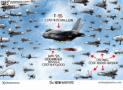
Who but Barack Obama could draw such false praise using the Sputnik space launch to justify more… railroads? So what can we expect in next year’s State of the Union? Musket subsidies in response to North Korean rocketry? Telegraph spending in response to Wikileak hackers? By now, intellectual sloppiness has become the primary distinguishing trait of Obama’s State of the Union addresses. Recall last January, when he so grossly misstated a century of First Amendment jurisprudence that sitting Supreme Court Justice Samuel Alito was compelled to reply, “not true.” The fact that Obama once taught Constitutional law only amplified that bizarre spectacle. This year, Obama’s State of the Union was most notable for his inapt “Sputnik” reference: “Half a century ago, when the Soviets beat us into space with the launch of a satellite called Sputnik, we had no idea how we’d beat them to the moon. The science wasn’t there yet. NASA didn’t even exist. But after investing in better research and education, we didn’t just surpass the Soviets. We unleashed a wave of innovation that created new industries and millions of new jobs. This is our generation’s Sputnik moment.” So what exactly triggered this sudden “Sputnik moment,” Mr. President? Have the Chinese landed a man on Mars? Has al Qaeda achieved cold fusion? Did the Cubans cure cancer? And “no idea how we’d beat them to the moon?” We certainly knew it wouldn’t happen via high-speed rail, Mr. President. Our rocket program was well underway, and famed German-American rocket scientist Wernher von Braun had popularized manned lunar mission proposals throughout the 1950s. The attempted analogy is sloppy and transparently incongruous. Unfortunately, this episode isn’t just a new source of trivial humor at Obama’s expense. Rather, it reveals something deeper, that Obama still doesn’t get it. That he hasn’t corrected course in the way he wants American voters to believe heading into 2012. Instead, as he has throughout his political career, Obama exploited the Sputnik reference to unveil a stale platter of new federal spending. All euphemized as “investment,” of course. Moreover, Obama emphasized three areas for spending increases – education, “green” energy, and infrastructure – that he has emphasized throughout his tenure. As noted by economist Stephen Moore, federal education spending has already increased 116% since 2008, and transportation spending increased 40% during that period. As for the Department of Energy, its funding has increased 81% since 2008. Yet what we need is even more of the same? After two years, the failure of his massive government spending agenda is manifest. Unemployment remains above 9% for a post-World War II record 20th consecutive month, despite his February 2009 promises that $1 trillion in “stimulus” spending would have reduced it to 7% by now after topping out at 8% over one year ago. Meanwhile, the Congressional Budget Office (CBO) just this week announced the alarming news that this year’s deficit will reach a record $1.5 trillion. That follows deficits of $1.4 trillion and $1.3 trillion in Obama’s first two years. Obama’s apologists, of course, claim that the magnitude of the recent recession explains those numbers. The early 1980s recession, however, was far worse. Unemployment, interest rates and inflation thirty years ago significantly exceeded the levels reached in the 2008-2009 downturn, and the two recessions’ durations were approximately the same. The difference between then and now lies in the responses and the results. Obama unleashed a federal spending binge, and unemployment has increased from 8.2% to 9.4% in the 22 months since. By contrast, in the same 22 months following the effective date of the Reagan tax cuts in January 1983, unemployment plummeted from 10.4% to 7.2%. Disturbingly, one area where Obama expressed readiness to cut spending was national defense. Moments after proposing only spending freezes for federal employees, he said, “The Secretary of Defense has also agreed to cut tens of billions of dollars in spending that he and his generals believe our military can do without.” So according to Obama, we can only afford to freeze non-defense discretionary spending after he succeeded in increasing it 46% in his first two years. But somehow, “tens of billions of dollars” can be cut from America’s overburdened military? Obama’s sloppy Sputnik reference is illustrative of his larger inability to digest the failure of his government spending agenda. Now, the question becomes whether his rhetoric succeeds in clouding voters’ perception of the approaching precipice. |

Related Articles : |
