




|
|
|







| Unaccountable Congress Considers Exempting Self from ObamaCare Exchanges |
 |
|
By Ashton Ellis
Thursday, April 25 2013 |
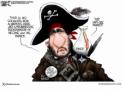
This is not a joke. News broke late Wednesday night that a secret bipartisan deal is in the works to exempt Congress and its staff members from purchasing more expensive health insurance on an ObamaCare exchange. The reason for the deal: Members of Congress can’t afford the cost of compliance. The reason for the secrecy: Congress exempting itself from ObamaCare would be an unparalleled act of hypocrisy. The attempted shunning of accountability is stunning. Apparently, both Senate Majority Leader Harry Reid (D-NV) and House Speaker John Boehner (R-OH) have negotiated for months on an agreement to exempt Members of Congress and their legislative staff from having to purchase more expensive health insurance on a state- or Washington, D.C.-based exchange, according to the news website Politico. The fear is that the federal government, the technical “employer” of Congress and its staff members, will not subsidize the increased cost of health insurance required by ObamaCare. Instead, it might choose to save money by shifting a greater amount of the cost to individual members and their staff. With Congress’ eligibility expiring for the comparatively generous Federal Employees Health Benefits Plan (FEHBP) when ObamaCare goes into effect in 2014, many senior lawmakers are concerned that a surge in the cost of health insurance will make public service unaffordable for many of their current aides. For junior-level staffers making $25,000 a year, health insurance on a state-based exchange could cost as much as $7,000 annually. Older, more experienced workers would also see higher prices, and might leave the public payroll to reemerge as much richer lobbyists. Losing the former would deprive Congress of cheap, hardworking labor, while exits by the latter would constitute a destabilizing “brain drain” as decades of institutional knowledge goes into the service of special interest groups. In both cases, Members of Congress fear that the low- and middle-income workers they depend on will flee rather than go bankrupt complying with ObamaCare’s costly insurance mandate. Welcome to reality, Senators and Representatives. As originally drafted, ObamaCare did not apply to Members of Congress and their staff. But thanks to an amendment pushed by Senator Charles “Chuck” Grassley (R-IA), congressional politicians and their support staff are now facing the same fiscally perilous future as are all other Americans. Talk to any business operator in America and you’ll hear about the devastating impact ObamaCare is having on budgets and employment. Many companies have implemented hiring freezes since the health law’s mandates and penalties apply only to full-time workers. Others are reducing hours to keep employees below the number of work hours that trigger the reform’s punitive regulations. And yes, many individuals and firms are making employment and compensation decisions based not on what they would like to do, but rather on which actions will result in the least amount of financial pain. It’s often been said that the government should operate more like a business. Now that Congress is finally starting to feel the harmful consequences of its own law, some of its key leaders want anything but real world accountability. To be sure, not everyone is jumping aboard the exemption train. Senator Richard Burr (R-NC) told Politico that he doesn’t favor carving out any kind of congressional exemption. “I have no problems with Congress being under the same guidelines [as the American people]. I think if this is going to be a disaster – which I think it’s going to be a disaster – we ought to enjoy it together with our constituents.” With congressional leaders like Reid, Boehner and others trying to construct an escape hatch to save themselves from an unworkable law, Grassley, Burr and their colleagues deserve support for going down with the ship if repeal doesn’t work. Now that Reid’s and Boehner’s secret negotiations are out in the open, it’s time for other lawmakers and members of the public to condemn the deal as the kind of corrupt bargain that destroys public confidence in government. Any Member of Congress who supports it after today deserves to lose his or her seat in the next election. |
Related Articles : |
