




|
|
|

















20 July 2012
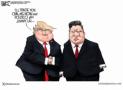
National Review deputy managing editor Kevin Williamson discusses his new book, The Dependency Agenda, and the plot by Democrats to earn votes by making more Americans more dependent on the government.
0:00
0:00
Related Podcasts

16 April 2026
Demian Brady, Vice President of Research for the National Taxpayers Union Foundation, discusses who pays income tax and who doesn’t, the hidden costs of the tax code, Congressional efforts to reduce the complexity of tax filings, and the need to review Congressional pensions for members who resign from Congress in disgrace.

21 August 2025
Phil Kerpen, President of American Commitment, discusses the current state of the U.S. economy, the outlook for economic growth, what the future looks like for energy prices and regulation, and what impact tariffs may have on the economy.

13 June 2025
Wayne Crews, the Fred L. Smith Fellow in Regulatory Studies at the Competitive Enterprise Institute, discusses the recently released "Ten Thousand Commandments: An Annual Snapshot of the Federal Regulatory State,” how Congress is disregarding its enumerated powers, and the role of DOGE to commence deconstruction of the administrative state.

21 March 2025
Jaimie Cavanaugh, Legal Policy Counsel at the Pacific Legal Foundation, discusses what states can do to create more competition and drive down the rising cost of healthcare, how Certificate of Need (CON) laws impede access to care and block competition while limiting consumer choice and stifling innovation, and what state legislators can and should do to reform and repeal these antiquated laws.
01 November 2024
Tiger Joyce, President of the American Tort Reform Association (ATRA), discusses the excessive tort costs harming small businesses, jobs and economic growth, which states are judicial hellholes and which are models for sensible tort laws, why third party litigation financing is the single greatest change for the worse in the litigation system today, and what voters should look for in candidates when it comes to supporting a balanced justice system.
25 January 2024
Timothy Lee, CFIF's Senior Vice President of Legal and Public Affairs, discusses the enormous amount of deference afforded to federal regulatory agencies by the 40-year-old U.S. Supreme Court decision in Chevron v. Natural Resources Defense Council, and how the Supreme Court appears poised to eliminate that long-standing Chevron doctrine and reinstitute proper constitutional balance among the three branches of government.
