




|
|
|















17 February 2017
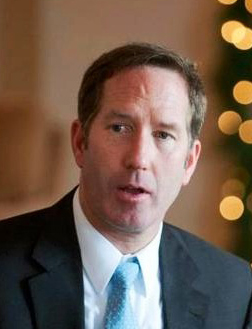
Timothy Lee, CFIF's Senior Vice President of Legal and Public Affairs, discusses the latest developments on the Dakota Access Pipeline, including a recent ruling by U.S. District Court Judge James Boasberg to deny a request for a restraining order that would have temporarily halted work on the final stretch of the Dakota Access Pipeline, President Donald Trump's order to move the project forward and the Army Corps of Engineers' issuance of an easement.
0:00
0:00
Related Podcasts

26 March 2026
Sally Pipes, President and CEO of the Pacific Research Institute, discusses how America’s healthcare system has never been better at keeping patients alive and living longer, types of governmental activities and proposals that disrupt America’s cycle of innovation, and the real drivers of high drug costs in America.

10 November 2022
McKenzie Richards, Policy Associate at the Pacific Research Institute, discusses simple solutions that can improve care and encourage healthcare services to be more "neighborhood-oriented," from improving telehealth options to getting rid of monopolistic "Certificate of Need" laws, and more.

04 June 2021
Katie Tubb, Senior Policy Analyst for the Thomas A. Roe Institute for Economic Policy Studies at The Heritage Foundation, discusses why it’s time for climate realism when it comes to China, President Biden’s hypocrisy on Keystone XL versus Nord Stream 2 pipelines, and actions the U.S. must take in the wake of the Colonial Pipeline crisis.
08 February 2019
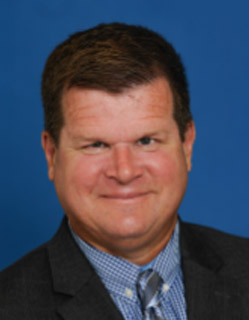
Dr. Robert M. Mcnab, Professor at Old Dominion University, discusses the challenges and promises of rural broadband access, what can help reduce the digital divide between rural and urban areas, and a recent study regarding the impact of broadband access and proposed investments in 5G networks in South Dakota.

20 October 2017
Mary Clare Amselem, Policy Analyst at The Heritage Foundation, discusses the negative consequences of eliminating college tuition fees, what happened when England offered "free" college and how such a program hurts, not helps, the poorest students.
27 January 2017
Craig Stevens, MAIN Coalition Spokesman, discusses the Dakota Access Pipeline's path, the inaccurate information surrounding the project and its importance for reducing America's dependence on foreign oil.
