




|
|
|















Load Newer Podcasts








12 May 2022
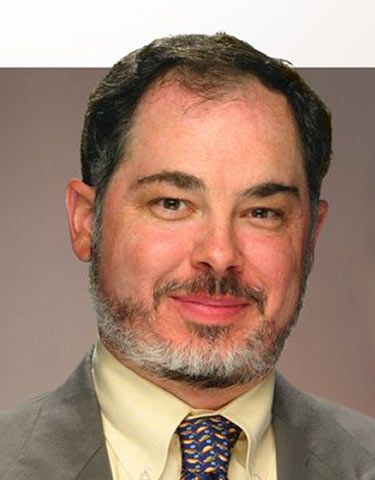
Nathan Lewis, author and a leading authority on monetary policy and economic history, discusses his latest book, Inflation: What It Is, Why It’s Bad, and How To Fix It, co-authored with Steve Forbes and Elizabeth Ames,. Lewis explains the threat inflation poses to our economy and democracy, what history has taught us about inflation, and guidelines to investing during inflationary times.
06 May 2022
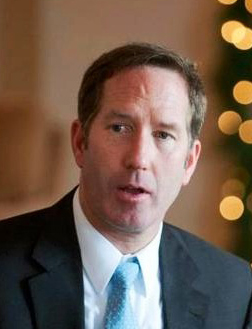
Mike Palicz, Federal Affairs Manager at Americans for Tax Reform, discusses how some politicians and “green” advocates are calling for a tax on carbon, why this is a preposterous idea, and how, if passed, it will obviously increase costs to consumers on everything from gas to food to heating and more.
29 April 2022
Quin Hillyer, Senior Commentary Writer and Editor for the Washington Examiner and Contributing Editor for National Review Online, discusses free speech on college campuses, how free expression took center stage in a speech by former Vice President Mike Pence at the University of Virginia, and predictions on who might make a run for president in 2024.
22 April 2022
Timothy Lee, CFIF's Senior Vice President of Legal and Public Affairs, discusses why it is important and in our national interest to reform our nation's immigration laws to attract and retain much-needed STEM workers who have extraordinary ability, are outstanding professors, researchers or entrepreneurs, or have advanced degrees and are working in critical sectors of the economy.
08 April 2022
William J. Conti, a Partner in the Washington, DC, Office of Baker & Hostetler, discusses the Biden Administration's positions and policies with respect to the war in Ukraine and what it means for global and NATO relations, whether and how war crime charges could be brought against Vladimir Putin and other Russian leaders, and the impact of domestic and foreign policy on the mid-term elections.
31 March 2022
Timothy Lee, Senior Vice President of Legal and Public Affairs, discusses the most recent proposal at the World Trade Organization to suspend provisions of the Agreement on Trade-Related Aspects of Intellectual Property (TRIPS) safeguarding patents for Covid vaccines, treatments and other therapies, why this anti-intellectual property proposal is unnecessary in the effort to solve global access to Covid vaccines, and how, if passed, it will negatively impact and undermine pharmaceutical innovation and jeopardize America's leading position as an inventive nation.
25 March 2022
Sally Pipes, President, CEO, and the Thomas W. Smith Fellow in Healthcare Policy at the Pacific Research Institute, discusses Senator Bernie Sanders' latest plan to invoke government red tape and strangle patient access, why both single-payer healthcare and the public option still won't work, how pharmaceutical price controls would limit access and stifle innovation, and why the FDA's accelerated approval program should continue, saving lives and money.
18 March 2022
The Honorable Francis Rooney, Former Member of the U.S. House of Representatives and Former Ambassador to the Holy See, discusses the current sanctions against Russia and specific steps that should be taken to counter Russian hostility in Ukraine while advancing America's interests.
10 March 2022
Dr. Diana M. Girnita, MD, PhD, CEO & Founder of Rheumatologist OnCall and a strong advocate for empowering physicians and patients to take charge of their medical health, discusses some of the serious challenges with America's healthcare system, why patients and their physicians should be allowed to assess the risks and make their own decisions free from government mandates, and how health savings accounts (HSAs) can further improve access to healthcare.
01 March 2022
The Honorable John McHugh, Former Secretary of the U.S. Army, Former Member of the U.S. House of Representatives, and current Chairman of the Package Coalition, discusses the Postal Service Reform Act and how it will save taxpayer money while strengthening the U.S. Postal Service.
25 February 2022
James Brooke, visiting fellow at the Foundation for Defense of Democracies, Former Moscow Bureau Chief for Bloomberg and Moscow-based Correspondent for Voice of America, discusses the current crisis in Ukraine, Russian President Vladimir Putin’s end game, Ukraine’s military capabilities, the response by the U.S. and its allies, and why China is closely watching.
18 February 2022
Amy Swearer, Legal Fellow in the Edwin Meese Center for Legal & Judicial Studies at The Heritage Foundation, discusses how armed citizens make situations safer as evidenced on the defensive gun use database available at heritage.org, the state of onerous gun restrictions around the country, and the current case before the Supreme Court regarding a citizen's right versus privilege “to bear arms."
11 February 2022
Rachel Greszler, Research Fellow in Economics, Budget and Entitlements at The Heritage Foundation, discusses the most problematic provisions included in the Biden Administration’s Worker’s Task Force pro-union recommendations, and how the Administration's anti-worker agenda ultimately may be railroaded through via executive fiat.
04 February 2022
Quin Hillyer, Senior Commentary Writer and Editor for the Washington Examiner, discusses how China has violated the principles of the Olympics and why it does not deserve to host the games.
28 January 2022
William J. Conti, Partner in the Washington, D.C., office of Baker & Hostetler, discusses why things don't look good for President Biden and his party in the mid-term elections, including the failure of the Build Back Better plan, coronavirus, inflation, and Russia's possible incursion into Ukraine, among other issues.
Scroll to load more
