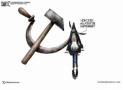
Democrats hope to press the "affordability" issue in this year's midterm election season, but there's one potentially glaring problem for them, as illustrated by our friends at Unleash Prosperity...
[caption id="" align="alignleft" width="668"] Biden Versus Trump on Inflation[/caption]
“Lost Hospitals, Lost Health Care Services, Lost Jobs…It’s Time to Fully Repeal the Tennessee CON.”
NASHVILLE, TN – Today, the Center for Individual Freedom (CFIF) launched a new digital advertisement in the Knoxville media market as part of its ongoing campaign calling for full repeal of Tennessee’s Certificate of Need (CON) laws. The advertisement highlights how the state’s CON laws have cost Tennessee communities additional hospitals and health care services, as well as hundreds of millions in direct economic investment, along with the untold numbers of jobs that would have resulted from such investment.
“Tennessee’s CON laws have prevented up to 63 additional hospitals from being built across the state, including as many as 25 in rural areas, which desperately need them,” said Jeff Mazzella, President of CFIF, referencing a recent report by the Beacon Center for Tennessee that looked at the impact of the state’s CON laws over the last 20 years.
Tennessee’s CON laws empower a board of unelected bureaucrats to deny new health care facilities and services across the state, restricting access to the high-quality health care on which Tennesseans depend. In 2021, the state legislature made progress by reforming the state’s CON laws. CFIF is urging the legislature to finish the job and fully repeal the state’s remaining CON requirements.
“A whopping 5.5 million Tennesseans have been denied increased access to health care services and Tennessee’s communities have lost over $700 million dollars in direct investment as a result of the state’s CON laws,” Mazzella continued. “That is unacceptable. It’s time for lawmakers to fully repeal Tennessee’s remaining CON laws once and for all.”
"On that fateful day 25 years ago today, when Islamic terrorists used hijacked commercial airliners to strike at the heart of Western civilization and kill thousands, the skyline of New York City and Americaâs soul changed forever. The Sept. 11 attacks, the deadliest on United States soil in history, and their aftermath, have also essentially haunted every presidential administration since. And…[more]