




|
|
|













02 November 2018
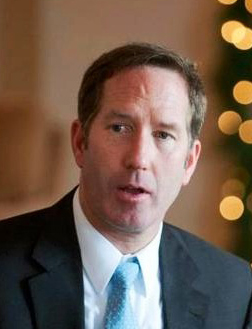
Timothy Lee, CFIF's Senior Vice President of Legal and Public Affairs, discusses a recent poll that shows a large majority of Americans self-censor their viewpoints and conceal their political activities, and why the IRS should not be permitted to collect sensitive private information on donors.
0:00
0:00
Related Podcasts
07 May 2026
Timothy Lee, CFIF’s Senior Vice President of Legal and Public Affairs, discusses newly introduced legislation to shield America’s energy producers from relentless attacks in the form of state-led climate liability lawsuits and other lawsuits, which threaten to undermine American energy dominance.

15 February 2024
William J. Conti, Attorney and Former Partner at Baker & Hostetler, discusses the recently released report from Special Counsel Robert Hur regarding President Biden, the politics of various legal trials involving former President Trump, the Super Bowl ad starring Robert F. Kennedy, Jr., and the potential political ramifications of all of the above.

26 August 2022
Scott Blackburn, Research Director at the Institute for Free Speech, discusses a first-of-its-kind report that grades the freedom of citizens and advocacy groups in each state to speak about candidates, government and issues of public policy, which states performed poorly, and which states earned a respectable score.
13 June 2022
William J. Conti, Partner in the Washington, DC, Office of Baker & Hostetler, discusses some of the political significance in state primary elections, what they may mean for the mid-term elections, whether the January 6 hearings will have an impact on upcoming elections, and what we know (and don’t know) about the SCOTUS investigation into the leaked draft opinion.

04 June 2021
Katie Tubb, Senior Policy Analyst for the Thomas A. Roe Institute for Economic Policy Studies at The Heritage Foundation, discusses why it’s time for climate realism when it comes to China, President Biden’s hypocrisy on Keystone XL versus Nord Stream 2 pipelines, and actions the U.S. must take in the wake of the Colonial Pipeline crisis.

12 May 2011
Megan L. Brown, a partner at Wiley Rein LLP in Washington, D.C., discusses American Electric Power Co., Inc. v. Connecticut, a case currently before the U.S. Supreme Court. Brown articulates why the High Court should reject the "public nuisance" climate change claim brought by a handful of states against some of the nation's largest electric utility companies.
