




|
|
|










07 June 2019
Phil Kerpen, President of American Commitment, discusses the Consumer Financial Protection Bureau's proposal to relax the Obama-era rules that would severely restrict the availability of small-dollar loans and why Director Kathleen Kraninger should stay the course on reversal.
0:00
0:00
Related Podcasts
04 November 2022
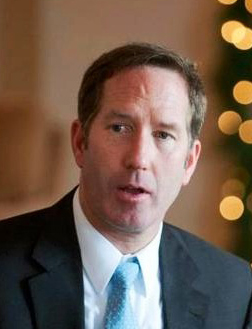
Timothy Lee, Senior Vice President of Legal and Public Affairs at the Center for Individual Freedom, discusses the U.S. Court of Appeals for the Fifth Circuit's recent decision ruling the Consumer Financial Protection Bureau's (CFPB) funding scheme to be unconstitutional, why the payday lending rule violates the Constitution's separation of powers, and how Congress created the agency that has too much unaccountable power.

23 April 2021
William J. Conti, a partner in the Washington, DC, office of Baker & Hostetler, discusses National Collegiate Athletic Association v. Alston, a case before the U.S. Supreme Court to determine whether the NCAA's limits on compensation for student athletes violate the nation's antitrust laws, and why abolishing the Senate filibuster would be shortsighted.

17 July 2020
Michael Petrilli, President of the Thomas B. Fordham Institute, discusses how income often depends on "where you live" and not just educational attainment, and how schools are doing in the face of the COVID pandemic.

11 January 2019
Adam Michel, Policy Analyst with the Roe Institute for Economic Policy at The Heritage Foundation, discusses notable changes in the House Democratic rules package that could mean more spending and higher taxes and how universal savings accounts could help Americans save for their own priorities.

01 June 2018
Nicholas Eberstadt, the Henry Wendt Chair in Political Economy at the American Enterprise Institute, discusses why the U.S. must have a radically different approach to diplomacy with North Korea, whether denuclearization is even an option with North Korea, and what President Trump can learn from President Reagan.

06 October 2017
Bob Dorigo Jones, Senior Fellow for the Center for America, discusses what's up next with the Wackiest Warning Labels contest, the ridiculous criteria a company must meet to host an unpaid intern, and the government's double standard.
